Address:
Jl. Kebo Iwa II Gg. Batu Sunia, Padangsambian Kaja, Kota Denpasar
Working Hours:
Monday–Friday: 8:00 AM – 5:00 PM
Saturday–Sunday: 8:00 AM – 3:00 PM


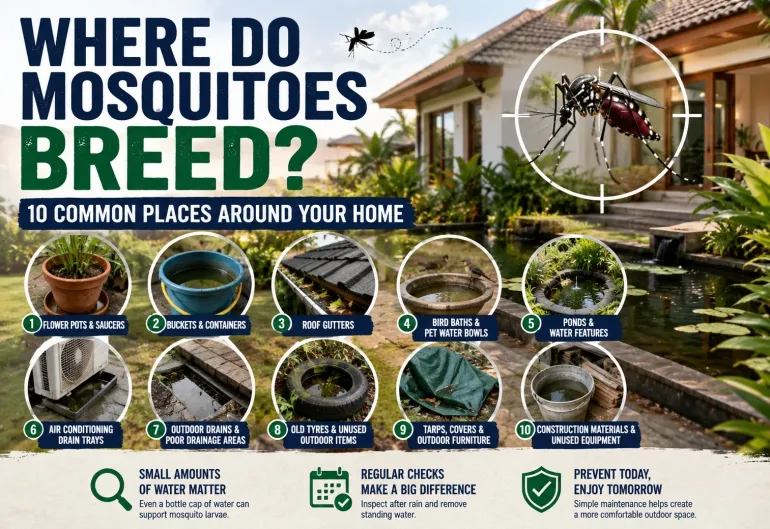
Mosquitoes often breed in places that are easy to overlook. Learn about the most common mosquito breeding sites around homes, villas, and gardens, plus practical prevention tips for reducing mosquito activity.
Mosquitoes don’t appear by chance. Most species depend on standing water to complete their life cycle, and many breeding sites are much smaller than people realise. Understanding where mosquitoes breed is one of the most effective ways to reduce mosquito activity around your home, villa, or business.
One of the most common misconceptions is that mosquitoes only breed in dirty ponds or stagnant swamps. In reality, many mosquito species—including some commonly found around homes—can lay their eggs in surprisingly small amounts of standing water.
A container holding rainwater for just a few days may be enough for mosquito larvae to develop. This is why even clean and well-maintained properties can experience mosquito problems if water is allowed to collect unnoticed.
The good news is that many mosquito breeding sites are easy to manage once you know where to look. Regular inspections and simple maintenance can significantly reduce the conditions that allow mosquito populations to grow.
Not every property has the same mosquito breeding sites, but the following locations are among the most common around homes, villas, hotels, restaurants, and commercial properties.
The first step in preventing mosquitoes is learning to recognise these hidden water sources before they become breeding habitats.
Plant pots and their saucers are among the most overlooked mosquito breeding sites. After watering plants or rainfall, small amounts of water can remain trapped for several days—long enough for mosquito larvae to develop.
Emptying excess water regularly or improving drainage helps prevent these containers from becoming breeding habitats.
Buckets, watering cans, bins, children’s toys, and unused containers left outdoors often collect rainwater without being noticed.
Even a small amount of standing water can support mosquito breeding if it remains undisturbed.
Blocked or poorly maintained gutters can trap leaves and rainwater, creating hidden breeding sites that are rarely inspected.
Cleaning gutters regularly is one of the simplest ways to reduce mosquito activity around a property.
Bird baths and outdoor pet water bowls can become mosquito breeding sites if the water is not changed frequently.
Replacing the water every few days helps interrupt the mosquito life cycle while keeping these areas safe for animals.
Ponds, fountains, and ornamental water features add beauty to tropical gardens but may also provide breeding opportunities when water becomes stagnant.
Proper circulation, filtration, or regular maintenance helps minimise mosquito breeding.
Many people imagine mosquitoes breeding only in large ponds or swamps. In reality, most breeding sites found around homes are surprisingly small and easy to overlook.
Regularly checking containers, gutters, and outdoor water sources often has a much greater impact than relying solely on sprays or repellents.
Many outdoor air conditioning units produce condensation during normal operation. If the drain tray or condensate outlet becomes blocked or allows water to collect, it may provide a suitable breeding site for mosquitoes.
Regular inspection and proper drainage help prevent water from remaining in these areas.
Not all drains become mosquito breeding sites, but drains that retain standing water for long periods can support mosquito larvae.
Poor drainage around patios, gardens, driveways, or outdoor walkways may also leave shallow pools of water after rainfall.
Keeping drainage systems clear allows water to flow away instead of collecting.
Old tyres are well known for collecting rainwater. Because the water is shaded and protected from direct sunlight, it can remain undisturbed for long periods, creating an ideal environment for mosquito breeding.
Other unused outdoor items such as wheelbarrows, plastic covers, or storage containers can present similar risks if water is allowed to accumulate.
Protective covers placed over garden furniture, barbecues, or equipment can develop small pockets where rainwater collects.
These hidden water pockets are often overlooked during routine cleaning, especially during the rainy season.
Checking outdoor covers regularly helps eliminate another potential breeding site.
Building materials, plastic sheets, buckets, pipes, and unused equipment stored outdoors can collect rainwater if left uncovered.
Whether at homes, villas, hotels, or construction sites, keeping these materials organised and protected from rain helps reduce mosquito breeding opportunities.
Even if your own property is well maintained, mosquitoes may still originate from nearby breeding sites.
Neighbouring gardens, vacant land, construction sites, blocked drains, or unmanaged water containers can all contribute to mosquito activity in the surrounding area.
This is why mosquito management is often most effective when property owners combine good maintenance practices with an awareness of the wider environment.
The encouraging news is that most mosquito breeding sites are both visible and manageable.
A simple routine of inspecting your property after rainfall, removing standing water, cleaning gutters, and maintaining outdoor areas can significantly reduce mosquito breeding opportunities before they become a larger problem.
For properties that continue to experience high mosquito activity despite regular maintenance, a professional inspection can help identify less obvious breeding sites and recommend the most appropriate mosquito management strategy.
Misunderstanding where mosquitoes breed often leads people to focus on the wrong areas. Here are a few common myths that are worth clarifying.
Not always.
Many mosquito species, including those commonly found around homes, prefer clean or lightly contaminated standing water. Rainwater collected in buckets, flower pots, roof gutters, or containers can provide ideal breeding conditions.
Not necessarily.
While large bodies of water can support mosquitoes under certain conditions, small containers holding water for several days are often far more common breeding sites around homes and villas.
Mosquito eggs and larvae are easy to overlook, especially in small containers or hidden water sources.
Regular inspections are more effective than waiting until mosquitoes become noticeable.
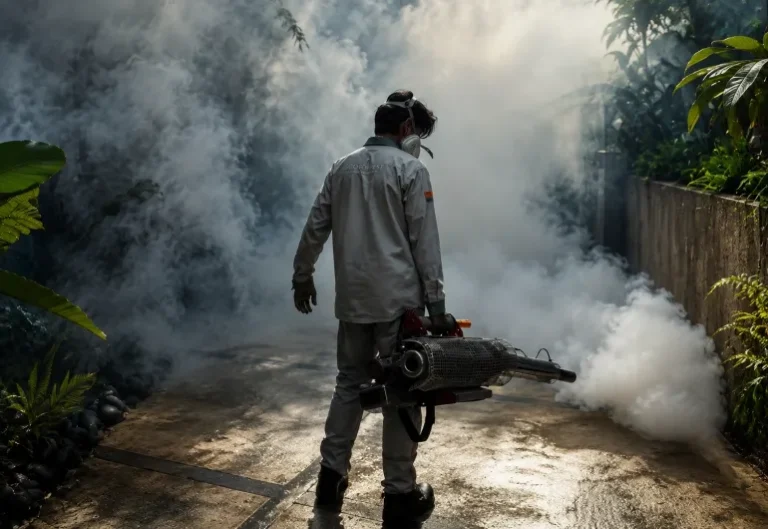
Fogging can quickly reduce adult mosquito activity, but it does not remove the standing water where new mosquitoes develop.
Long-term mosquito management combines environmental maintenance with appropriate mosquito control measures when necessary.
Most mosquito breeding sites are surprisingly easy to manage once you know where to look.
Regularly checking your property after rainfall, emptying standing water, cleaning gutters, maintaining ponds, and keeping outdoor areas tidy can significantly reduce the conditions that allow mosquitoes to reproduce.
For homes, villas, hotels, and commercial properties where mosquito activity continues despite good maintenance, a professional inspection can help identify hidden breeding sites and recommend practical long-term solutions.
Continue exploring our mosquito guides: