Address:
Jl. Kebo Iwa II Gg. Batu Sunia, Padangsambian Kaja, Kota Denpasar
Working Hours:
Monday–Friday: 8:00 AM – 5:00 PM
Saturday–Sunday: 8:00 AM – 3:00 PM

Cockroach Control in Bali
Cockroaches are common in tropical properties, but controlling them effectively is not simply about spraying the insects you see. We identify the species, activity, harbourage areas, and conditions contributing to the infestation before recommending an appropriate treatment strategy.


Know the Pest
Cockroach control starts with understanding what you are dealing with. German and American cockroaches have different habits and can be found in different parts of a property.
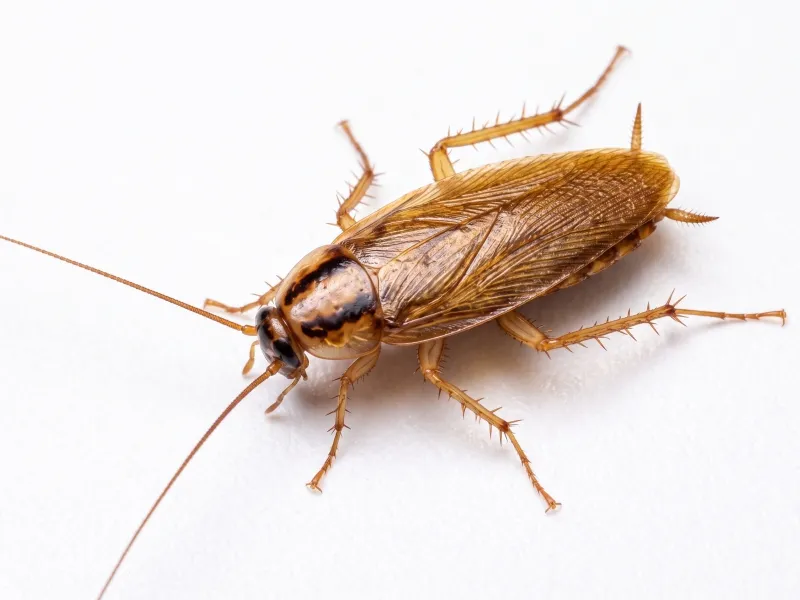
Smaller and commonly associated with indoor areas such as kitchens, cabinets, appliances, and food preparation spaces. They can reproduce quickly when food, moisture, and shelter are available.
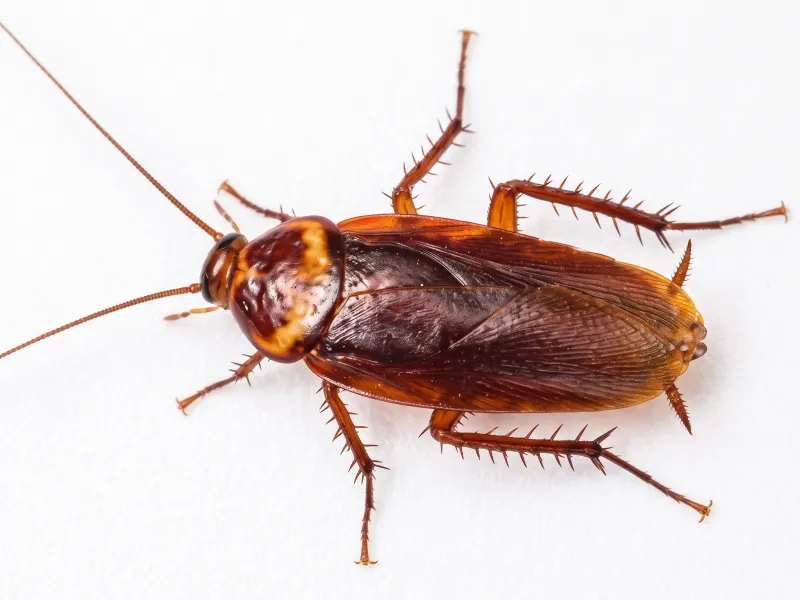
Larger and often associated with drains, damp areas, service spaces, and surrounding environments. They can enter buildings through openings and drainage systems.
The same treatment approach does not necessarily suit every cockroach problem. Identifying the species and understanding where it is living helps determine what should be addressed.
Finding a cockroach does not always tell you where the infestation is coming from. Different parts of a property can provide food, moisture, shelter, and access points that allow cockroaches to remain active.
Kitchens, cabinets, appliances, and food preparation areas can provide access to food, moisture, warmth, and sheltered spaces. These conditions can support recurring cockroach activity.
Drains, service areas, bathrooms, and other damp locations can provide suitable conditions for cockroaches, particularly where moisture and access points are present.
Cockroaches can remain hidden in cracks, gaps, cabinets, wall voids, and other sheltered areas. These locations can make an infestation difficult to control by treating only visible insects.
Seeing cockroaches is only part of the problem. Effective control starts with understanding where they are living, feeding, and reproducing.
Seeing cockroaches return after treatment does not always mean that more pesticide is needed. The problem may be related to where the cockroaches are hiding, how the treatment is applied, or repeated exposure to the same type of insecticide.
Repeated or inappropriate use of insecticides can contribute to selection for resistance in cockroach populations. When the same treatment is repeatedly used without considering its effectiveness, control can become more difficult.
Cockroaches often spend much of their time in cracks, cabinets, appliances, drains, and other sheltered areas. Treating visible insects without addressing these harbourage areas may leave the main source of activity untouched.
Different cockroach species, infestation levels, and property conditions can require different control strategies. A treatment that works in one situation may not be appropriate for another.
Cockroach control is not always a one-time treatment. Monitoring activity after treatment helps determine whether the population is declining and whether further action or changes in strategy are needed.
Effective cockroach control is not about using more pesticide. It is about understanding the infestation and using the appropriate control strategy.
Effective cockroach control starts with understanding the infestation. Instead of treating every situation in the same way, we look at the species, activity, harbourage areas, and conditions around the property before deciding what needs to be addressed.
Identify the cockroach species, signs of activity, and areas where cockroaches are being seen.
Assess food sources, moisture, harbourage areas, access points, and other property conditions that may support the infestation.
Select an appropriate control strategy based on the species, infestation, and conditions found at the property.
Monitor cockroach activity after treatment to determine whether activity is declining and whether further action is required.
Address sanitation, moisture, harbourage, and access conditions that can allow cockroaches to return.
The goal is not to spray more. The goal is to control the infestation effectively by addressing the conditions that allow cockroaches to survive and return.
Spraying can be useful in the right situation, but it is not the entire cockroach control strategy. Effective treatment depends on choosing the right method for the infestation and the conditions around the property.
Depending on the situation, cockroach management may involve inspection, targeted treatment, baiting, environmental corrections, monitoring, or a combination of methods.

A single sighting may not tell you how much activity is happening elsewhere. Cockroaches can remain hidden in cracks, cabinets, appliances, drains, and other sheltered areas.
For this reason, recurring sightings or other signs of activity are worth investigating rather than simply treating the insects that are visible.
The important question is not only “How many cockroaches did you see?” but also “Why are they appearing here?”
Basic prevention can reduce the conditions that attract cockroaches. But when activity keeps returning, the problem may involve hidden harbourage areas, access points, moisture, or an infestation that requires a more targeted approach.
If cockroach activity keeps returning despite routine cleaning and basic prevention, the next step is to find out why they are returning rather than simply treating the insects you see.
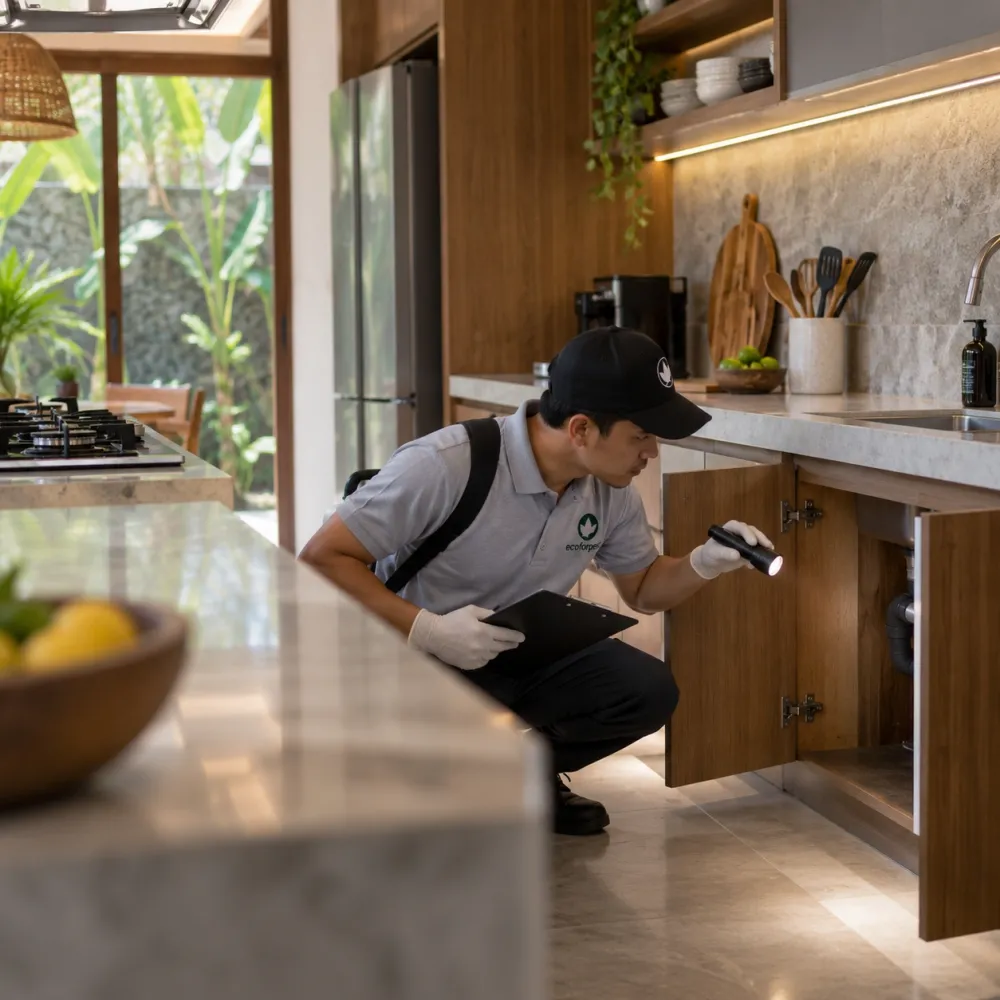
Cockroach problems can look different from one property to another. A villa kitchen, hotel, restaurant, and commercial building may have very different sources of food, moisture, shelter, and access.
That is why effective control should start with understanding the property and the conditions supporting cockroach activity, rather than applying the same treatment everywhere.
Kitchens, bathrooms, cabinets, appliances, and surrounding outdoor areas can all influence cockroach activity.
Guest rooms, kitchens, service areas, storage spaces, and shared facilities may require different control considerations.
Food preparation, storage, cleaning routines, drains, and equipment areas can create conditions that support activity.
Larger or more complex properties may require inspection across multiple areas to understand where activity is originating.
There is no single treatment that suits every cockroach problem. Depending on the species, activity, harbourage areas, and property conditions, different control methods may be used as part of the overall treatment strategy.
We assess cockroach activity, species, harbourage areas, access points, and property conditions before deciding what needs to be addressed.
Gel bait can be used in suitable locations to target cockroaches where they feed and move, particularly around areas of established activity.
Where appropriate, targeted residual treatment can be applied to relevant areas rather than relying on indiscriminate spraying.
Treatment can focus on areas where cockroaches shelter, including cracks, gaps, cabinets, service areas, and other suitable harbourage.
Follow-up helps evaluate changes in cockroach activity and determine whether additional treatment or a change in strategy is required.
We identify practical ways to reduce food, moisture, harbourage, and access conditions that may allow cockroach activity to continue.
Methods are selected according to what we find at the property, rather than applying the same treatment to every cockroach problem.
Practical answers to common questions about recurring cockroach activity, treatment, prevention, and when professional control may be needed.
Cockroaches can use drains, pipe openings, gaps, and other concealed routes to enter buildings. Keeping drains and plumbing areas clean, maintaining suitable drain traps, sealing gaps where possible, and reducing moisture can help reduce access.
If cockroach activity is already established, treatment should also address harbourage areas rather than simply killing the insects that are visible at night.
Not every cockroach infestation requires treatment of a septic tank, but sanitation and waste-management areas can become important sources of food, moisture, and harbourage.
A recurring infestation should therefore be investigated beyond the areas where cockroaches are being seen. Grease traps, drains, waste areas, kitchens, and other damp locations should be properly maintained.
Pest treatment is more likely to provide lasting control when the conditions supporting the infestation are also addressed.
Some household products and essential oils may temporarily interfere with insect trails or act as short-term deterrents, but they should not be treated as a reliable solution for an established infestation.
For pantry areas, start with sealed food containers, regular cleaning, removal of crumbs and spills, and reduced moisture. If activity continues, targeted professional treatment can be considered instead of repeatedly spraying broad areas.
Need Cockroach Control?
Tell us what you are seeing at your property. We can help assess the activity, identify possible causes, and recommend an appropriate cockroach control strategy.