Address:
Jl. Kebo Iwa II Gg. Batu Sunia, Padangsambian Kaja, Kota Denpasar
Working Hours:
Monday–Friday: 8:00 AM – 5:00 PM
Saturday–Sunday: 8:00 AM – 3:00 PM


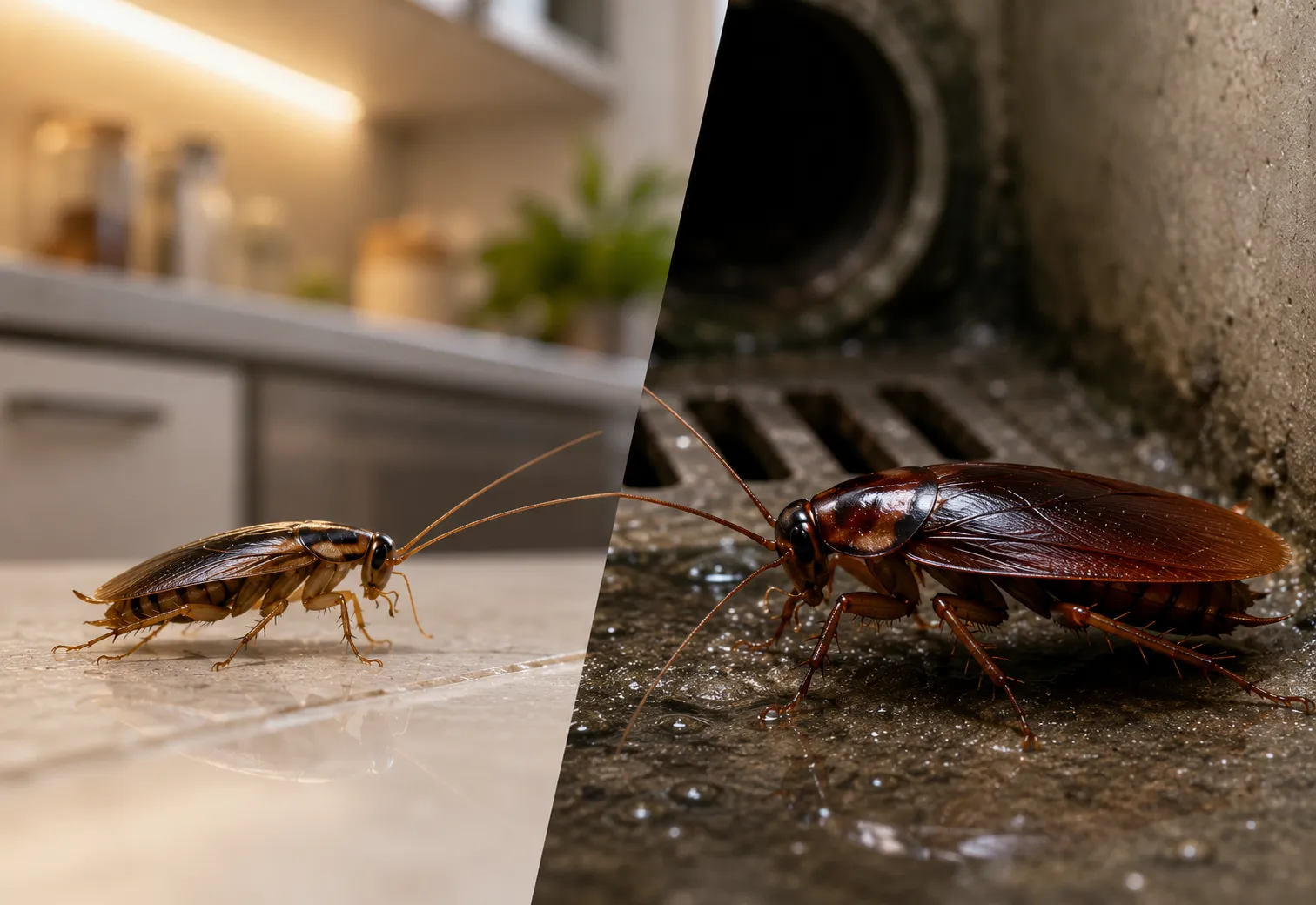
German and American cockroaches may look similar at first glance, but they differ in size, behaviour, habitats, and control methods. Learn how to identify each species and why proper identification is essential for effective cockroach control.
Not all cockroaches behave the same. Learning to identify the species is the first step toward choosing the most effective control strategy.
If you’ve spotted a cockroach in your home, villa, restaurant, or hotel, one of the first questions that comes to mind is:
“What kind of cockroach is this?”
While many people simply call them “cockroaches,” several species are commonly found in tropical regions like Bali. The two most frequently encountered are the German cockroach (Blattella germanica) and the American cockroach (Periplaneta americana).
Although they belong to the same insect group, they differ significantly in size, behaviour, preferred hiding places, and how they should be managed. Understanding these differences can help explain why some infestations are much more difficult to eliminate than others.
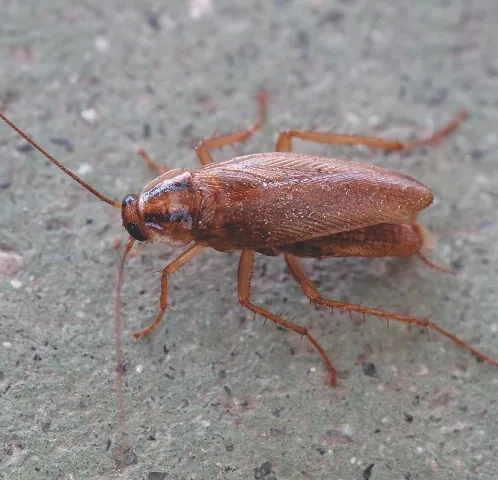
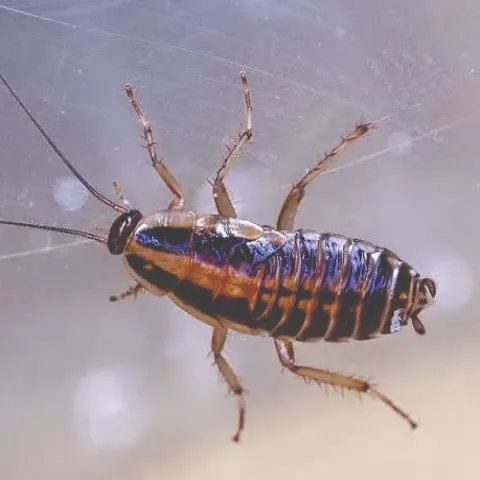
The German cockroach is one of the most common indoor cockroach species worldwide and is often considered the most challenging species to control.
Adults are relatively small, usually measuring around 13–16 mm, with a light brown body and two dark stripes running behind the head.
Unlike larger cockroaches that occasionally wander indoors from outside, German cockroaches spend almost their entire lives inside buildings, especially in warm environments where food and moisture are readily available.
They are commonly found in:
Because they reproduce quickly and hide in extremely small spaces, infestations can develop long before property owners notice the problem.
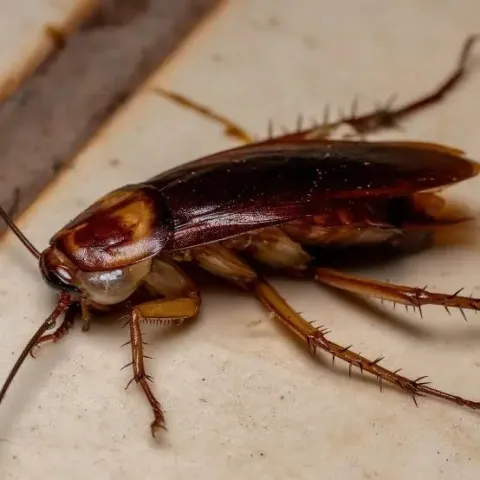
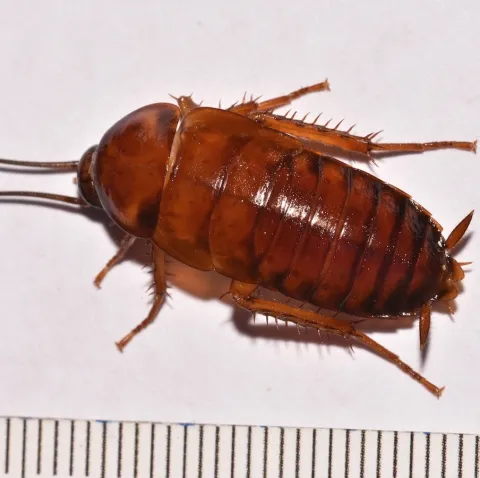
Despite its name, the American cockroach is found throughout tropical and subtropical regions around the world, including Bali.
This species is much larger than the German cockroach, typically growing between 35–50 mm in length.
American cockroaches prefer damp environments and are frequently associated with:
They occasionally enter homes and commercial buildings while searching for food or shelter, especially during warm, humid weather.
Although they reproduce more slowly than German cockroaches, their large size often makes them more alarming to homeowners and guests.
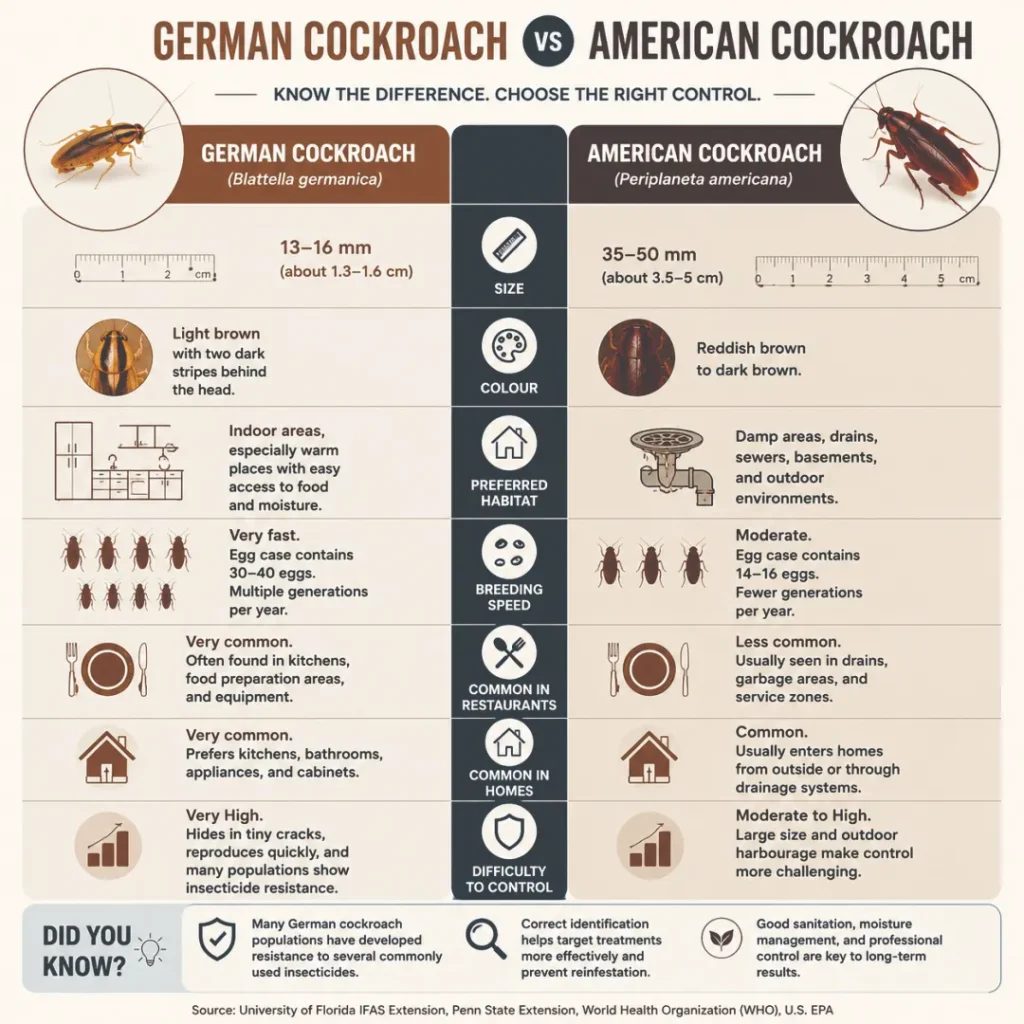
| Feature | German Cockroach | American Cockroach |
|---|---|---|
| Size | Small (13–16 mm) | Large (35–50 mm) |
| Colour | Light brown | Reddish brown |
| Preferred Habitat | Kitchens & indoor spaces | Drains & damp areas |
| Breeding Speed | Very fast | Moderate |
| Common in Restaurants | Very common | Less common |
| Common in Homes | Very common | Common |
| Difficult to Control | Very High | Moderate to High |
Many people assume that all cockroach infestations can be treated the same way. In reality, the most effective control strategy often depends on the species involved.
For example, German cockroaches tend to remain hidden inside cabinets, appliances, and wall voids. American cockroaches, on the other hand, are more closely associated with drainage systems and outdoor harbourage sites. Identifying where cockroaches live helps determine where treatment should be focused rather than simply treating the areas where they are seen.
One of the biggest misconceptions about cockroach control is that stronger sprays always produce better results.
Modern research has shown that many German cockroach populations have developed resistance to several commonly used insecticides after decades of repeated exposure. In some cases, cockroaches are able to survive products that were once highly effective, allowing resistant populations to continue breeding.
This doesn’t mean insecticides no longer work. Instead, it highlights the importance of choosing the right treatment strategy rather than relying on repeated spraying alone.
Today, professional cockroach management typically combines several approaches, including:
This integrated approach is generally more effective than repeatedly applying aerosol sprays whenever cockroaches are seen.
In homes, apartments, restaurants, hotels, and villas across Bali, German cockroaches are generally the species most often responsible for persistent indoor infestations, particularly in kitchens and food preparation areas.
American cockroaches are also common but are more frequently associated with drainage systems, utility areas, and outdoor environments before entering buildings.
Understanding which species you’re dealing with helps determine the most appropriate treatment strategy.
Read our guide: Cockroaches in Bali: What Expats Should Know Before Renting a Villa
If cockroaches continue to appear despite cleaning, sealing entry points, or using DIY products, the infestation may be established in hidden areas that are difficult to reach.
Professional inspection can help identify the species involved, locate harbourage areas, and recommend a treatment plan based on the conditions of your property rather than applying a one-size-fits-all solution.