Address:
Jl. Kebo Iwa II Gg. Batu Sunia, Padangsambian Kaja, Kota Denpasar
Working Hours:
Monday–Friday: 8:00 AM – 5:00 PM
Saturday–Sunday: 8:00 AM – 3:00 PM

Professional Mosquito Control in Bali
Professional mosquito control for homes, villas, hotels, restaurants, and outdoor spaces across Bali. We assess mosquito activity, identify breeding conditions, and recommend targeted treatment based on your property.
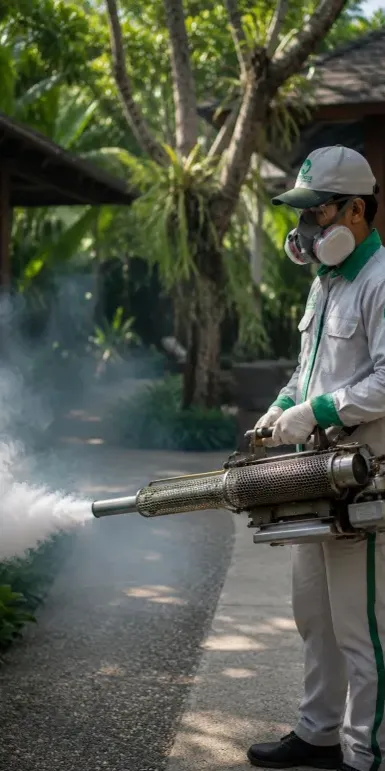
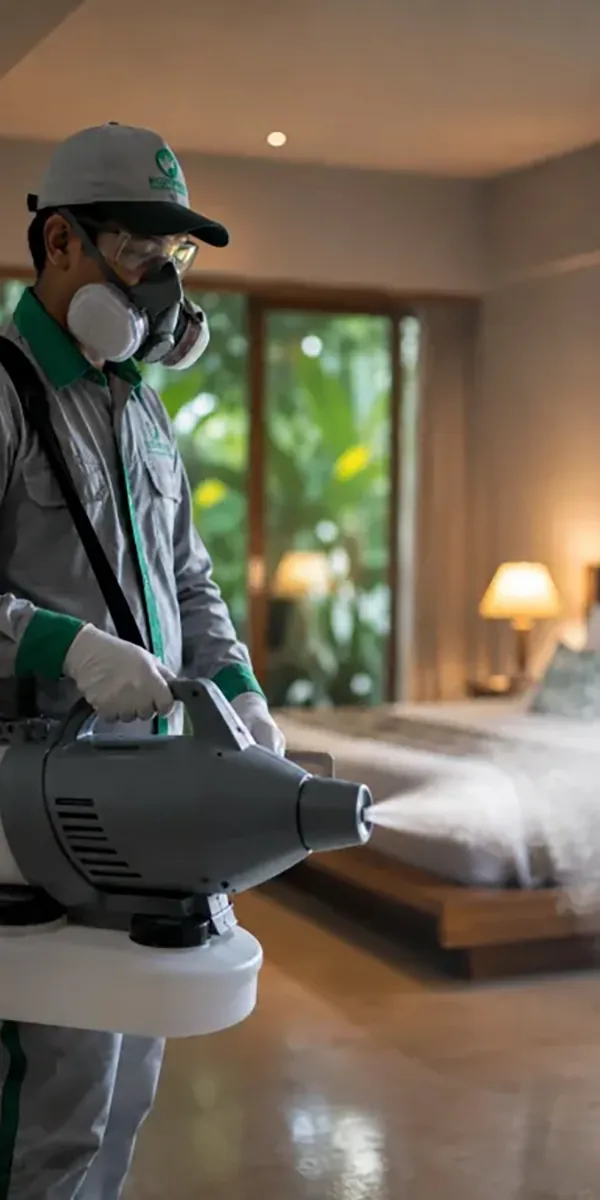
Outdoor living is part of everyday life in Bali. But persistent mosquito activity can make it difficult to comfortably enjoy your garden, terrace, pool area, or other outdoor spaces.
For homes, villas, hotels, and restaurants, mosquito problems can affect the comfort of families, guests, and customers. Effective mosquito control is about more than simply reducing the number of mosquitoes you see.
Mosquitoes in Bali: What Every Expat and Villa Owner Should KnowBali’s warm climate, humidity, and seasonal rainfall create conditions that allow mosquito populations to thrive.

Bali’s warm and humid climate can support mosquito activity throughout the year, especially when suitable breeding conditions are available.
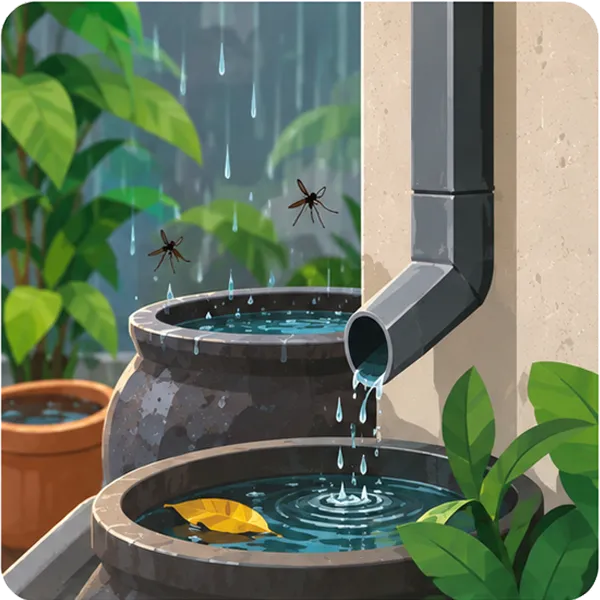
Rainfall can leave water in pots, buckets, gutters, containers, and other areas around a property, creating potential mosquito breeding sites.

Dense vegetation, shaded gardens, and planted areas can provide sheltered environments where mosquitoes may rest and remain active.
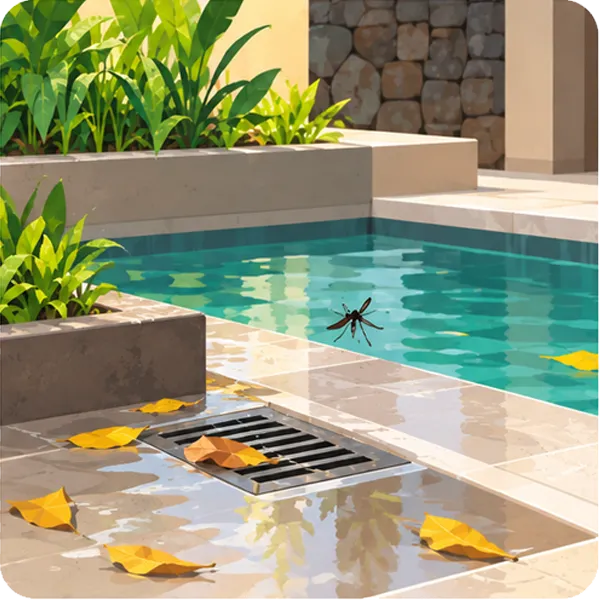
Ponds, decorative water features, pool surroundings, and areas with poor drainage can retain water and contribute to mosquito activity.
Long-term mosquito control involves more than treating adult mosquitoes. Identifying and reducing breeding environments around the property is an important part of effective mosquito management.
Recurring mosquito activity is often a sign that conditions around the property are allowing mosquitoes to remain active or reproduce.
You regularly notice mosquitoes around bedrooms, gardens, terraces, pool areas, or other parts of the property.
Mosquitoes make it uncomfortable to spend time in your garden, terrace, pool area, or other outdoor spaces.
Mosquito activity increases again after rainfall, suggesting that standing water or other suitable conditions may remain around the property.
Repellents, coils, or household sprays may reduce mosquito activity temporarily, but the problem keeps returning.
Simple maintenance can help reduce mosquito activity, but recurring problems may require a more targeted approach.
You can reduce mosquito activity around your property by emptying standing water, cleaning gutters, trimming dense vegetation, and using window screens or personal repellents.
These measures are useful for routine prevention. When mosquito activity is recurring or widespread, a professional inspection can help identify breeding sites and environmental conditions that may be contributing to the problem.
No single solution permanently eliminates mosquitoes. The most effective approach combines routine property maintenance with targeted mosquito control when needed.
Every property is different. Our mosquito control strategy depends on the size of the property, surrounding environment, mosquito activity, and potential breeding conditions.
We assess the property, surrounding environment, mosquito activity, and conditions that may support the mosquito life cycle.
We look for standing water, sheltered areas, and other potential breeding sites around the property.
Depending on the situation, treatment may include larval control, targeted residual treatments, or mosquito fogging where suitable.
We provide practical advice on drainage, water management, and property maintenance to help reduce conditions that support recurring mosquito activity.
Fogging can be useful in certain situations, but it is not a standalone solution for long-term mosquito management.
For occasional mosquito activity, preventive measures may be enough. When large numbers of adult mosquitoes are present, fogging can provide a rapid reduction in flying mosquitoes.
This can be particularly useful before outdoor events or periods when mosquito activity is expected to increase.
Fogging primarily targets flying adult mosquitoes. It does not eliminate standing water or other conditions where mosquitoes can reproduce.
For longer-term management, effective mosquito control also involves reducing standing water and addressing environmental conditions that support mosquito reproduction.
The most effective mosquito management combines environmental management with targeted treatments, using fogging when it is appropriate for the situation.

Our goal is to help homes, villas, restaurants, and hotels maintain more comfortable outdoor spaces by managing mosquito activity at its source.
Every property has different surroundings and conditions. Our approach is tailored to the tropical environment in Bali, combining inspection, appropriate treatment, and practical prevention advice.
Treatment is based on mosquito activity, property conditions, and the surrounding environment.
We combine targeted treatment with inspection and practical prevention measures where appropriate.
We identify conditions that may support recurring mosquito activity and provide practical advice to help reduce them.
Find answers to common questions about mosquito fogging, mosquito control systems, safety, and mosquito management for properties in Bali.
Protecting your family from dengue mosquitoes involves reducing breeding sites, managing standing water, using screens and personal protection, and addressing recurring mosquito activity around the property. Thermal fogging can rapidly reduce adult mosquitoes, but it does not remove breeding sites, so it is not a complete long-term mosquito control solution on its own.
Alternatives can include removing standing water, improving drainage, maintaining vegetation, using physical barriers such as screens, and applying targeted treatments where appropriate. The most suitable approach depends on the property, surrounding environment, and level of mosquito activity.
Systems such as UV traps and misting systems may be useful in certain property conditions, but their suitability depends on the outdoor environment and mosquito activity. They should be considered as part of a broader mosquito management strategy rather than as a universal solution.
Community mosquito control arrangements can vary between areas. Property owners may also arrange private mosquito control when they need treatment specifically for their home, villa, or commercial property.
Pest control treatments should be selected and applied according to the property conditions and the target pest. Treatment planning should also consider non-target organisms around the property, including wildlife commonly found in tropical gardens.
Treatment around pools, ponds, and other water features should be planned carefully to reduce the risk of unintended exposure. The treatment area, application method, and surrounding water features should be considered before applying any pest control product.
Fogging primarily reduces adult mosquitoes that are present at the time of treatment. If breeding sites remain around the property, new mosquitoes can continue to emerge. This is why long-term mosquito management also focuses on standing water, drainage, and other conditions that support mosquito breeding.
Fogging is primarily used to target flying adult mosquitoes. It does not by itself eliminate mosquito larvae developing in standing water. Larval control and removal or management of breeding sites may therefore be needed as part of a broader mosquito control strategy.
Need Mosquito Control?
Tell us what you’re experiencing at your property. We’ll help assess the mosquito activity and recommend the right next step.