Address:
Jl. Kebo Iwa II Gg. Batu Sunia, Padangsambian Kaja, Kota Denpasar
Working Hours:
Monday–Friday: 8:00 AM – 5:00 PM
Saturday–Sunday: 8:00 AM – 3:00 PM


Geckos are a common part of everyday life in Bali, especially in homes and villas. This guide explains why they appear, what attracts them, whether they're dangerous, and how increased gecko activity can sometimes indicate hidden insect problems. Learn how to understand—and live comfortably with—one of Bali's most familiar tropical neighbors.
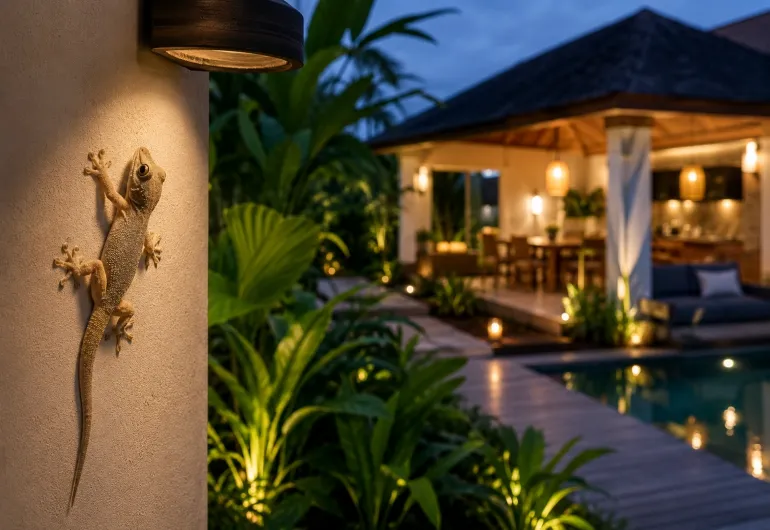
If you’ve recently moved to Bali or are staying in a villa for the first time, seeing geckos inside your home can be surprising. They often appear on walls and ceilings shortly after sunset, especially around lights where insects gather.
The good news is that this is completely normal.
Geckos are a common part of everyday life in Bali. Whether you’re staying in a private villa, a hotel, or a family home, you’ll likely see them throughout the island. Unlike termites, cockroaches, or rodents, geckos don’t damage buildings or contaminate food. Instead, they feed on mosquitoes, moths, flies, termites, and other small insects.
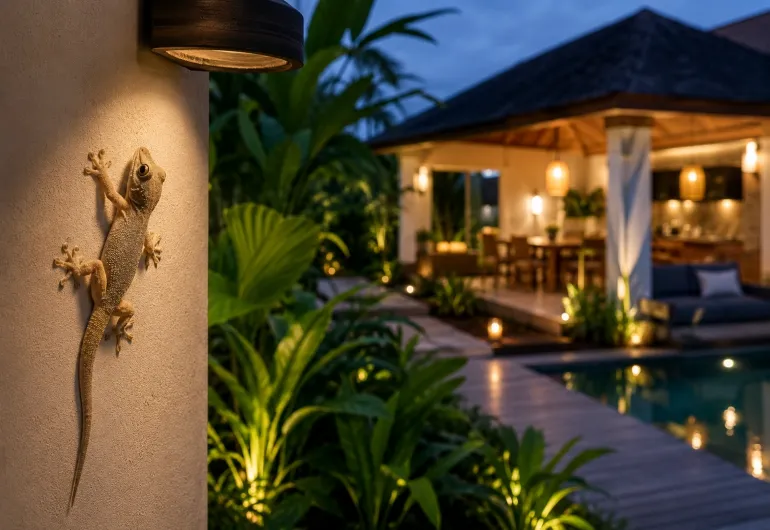
While finding one or two geckos is usually nothing to worry about, a sudden increase in their numbers may indicate that your property is attracting more insects than usual.
This guide explains why geckos are so common in Bali, what attracts them to your home, whether they’re dangerous, and when their presence may signal a larger pest issue.
Geckos thrive in Bali because the island provides everything they need to survive: warm temperatures, high humidity, and a constant supply of insects.
Unlike countries with long winters, Bali’s tropical climate allows insects to remain active throughout the year. Mosquitoes, moths, flies, termites, ants, and many other small insects are available almost every night, giving geckos a reliable food source.
Bali’s architecture also plays an important role.
Many villas and homes are designed to embrace the tropical environment with open living areas, natural ventilation, gardens, ponds, and outdoor lighting. These features create beautiful, comfortable spaces—but they also attract insects after sunset.
Where insects gather, geckos naturally follow.
This is why you’ll often find them near:
They’re not attracted to your house itself.
They’re attracted to the insects your house attracts.
One of the biggest misconceptions is that geckos only appear in dirty homes.
That’s simply not true.
A well-maintained luxury villa surrounded by tropical gardens may have more geckos than a small apartment because it attracts more flying insects at night.
For most properties in Bali, seeing a few geckos each evening is completely normal and usually reflects the island’s healthy tropical ecosystem rather than a maintenance issue.
Not all geckos in Bali are the same, but homeowners usually encounter one of two species.
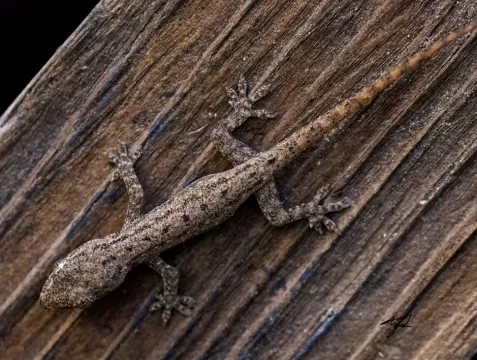
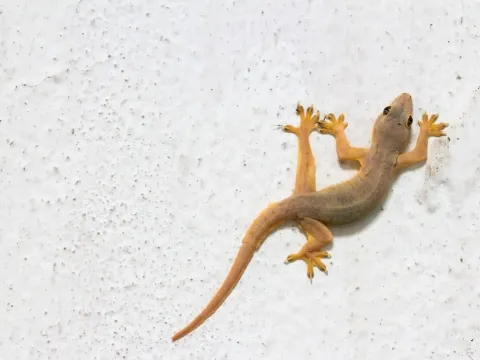
This is the small, pale-colored gecko commonly seen inside homes.
It usually grows between 7 and 12 cm (3–5 inches) and becomes active shortly after sunset. Thanks to its specialized toe pads, it can climb smooth walls, ceilings, glass, and even polished tiles with ease.
Its diet includes many insects that people would rather not have indoors, including:
Because of this, house geckos play a small but valuable role as natural insect hunters.
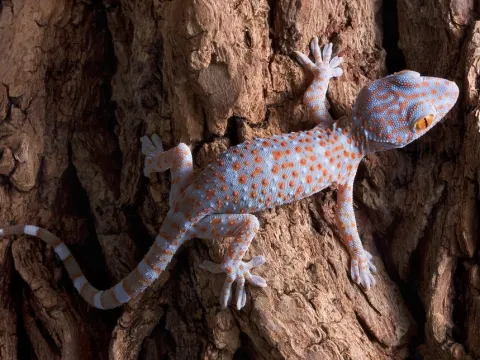
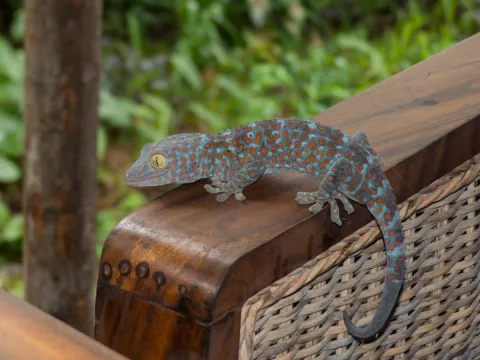
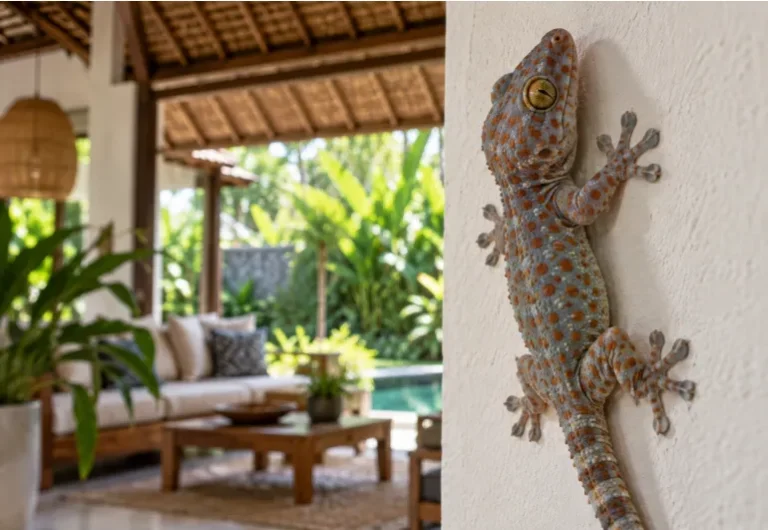
The Tokay Gecko is much larger and easier to recognize.
With its blue-grey body covered in bright orange spots and its distinctive “to-kay” call, it’s one of Bali’s most recognizable reptiles.
Unlike house geckos, Tokays usually prefer roofs, trees, gardens, and outdoor structures rather than living inside occupied rooms.
Although they can bite if cornered or handled, they generally avoid people and are not considered aggressive.
Like their smaller relatives, Tokay Geckos feed on insects and other small animals, helping maintain the natural balance of Bali’s ecosystem.
If you only remember one thing from this article, let it be this:
Seeing geckos in your Bali house is normal. Seeing more geckos than usual often means there’s more food for them—not necessarily a gecko problem.
Understanding that simple relationship is the first step toward understanding how tropical homes work.
Geckos don’t enter your home because they’re looking for people or leftover food. They come for one simple reason: insects.
Every evening, outdoor lights attract mosquitoes, moths, flies, and other flying insects. Geckos quickly learn where these insects gather and wait nearby to hunt.
This is why you’ll often find geckos around:
Many Bali homes naturally attract insects because of features such as tropical gardens, ponds, open-air living spaces, and natural ventilation. These designs create comfortable homes while also supporting a healthy insect population.
If your property attracts insects, it’s normal for geckos to appear as well.
The easiest way to understand gecko activity is to think of your home as a small tropical ecosystem.
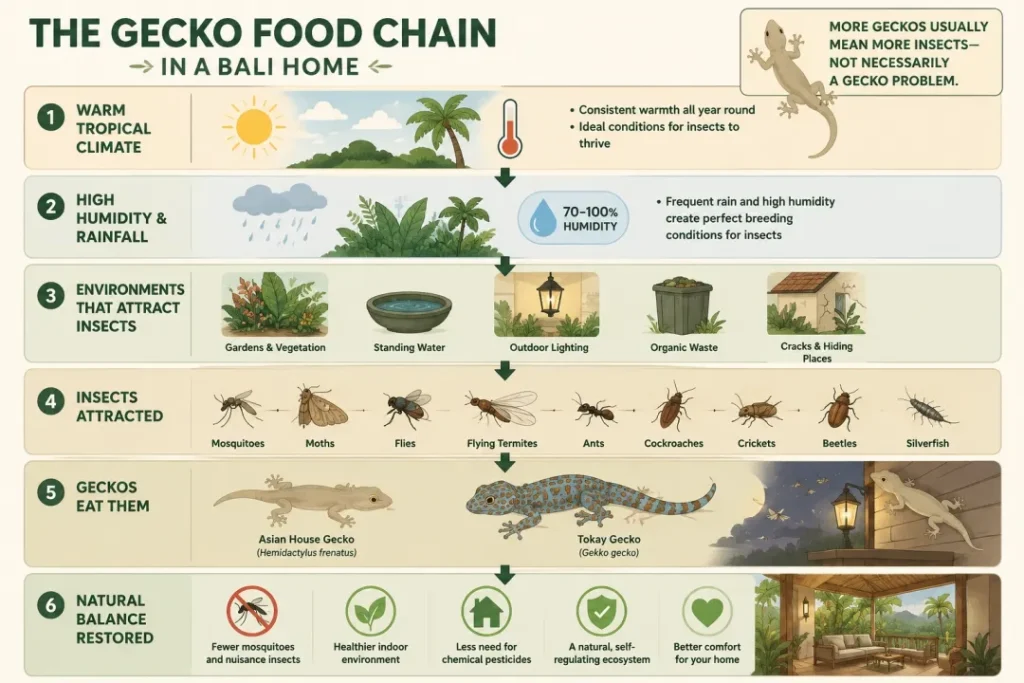
This is why pest professionals rarely see geckos as the problem. More often, they’re responding to an increase in insect activity.
Two homes on the same street can have very different levels of gecko activity.
The difference usually comes down to the surrounding environment rather than the house itself.
Properties near rice fields, rivers, tropical gardens, or undeveloped land tend to support more insects throughout the year. Likewise, villas with decorative outdoor lighting, ponds, and open living spaces naturally attract more flying insects after sunset.
Seasonal changes also play a role.
During Bali’s rainy season, mosquito populations increase, flying termites emerge, and vegetation grows rapidly. As food becomes more abundant, geckos become more active too.
This doesn’t mean your home has a gecko infestation—it simply reflects the changing conditions of a tropical environment.
For most homes in Bali, seeing one or two geckos every evening is completely normal.
However, you should pay closer attention if you notice a sudden increase in gecko activity, especially when it’s accompanied by other signs of insect problems.
These may include:
Rather than asking, “How do I get rid of the geckos?”, ask:
“Why are there suddenly more insects around my home?”
In many cases, reducing mosquito breeding sites, improving drainage, managing outdoor lighting, or addressing other pest issues will naturally reduce gecko activity over time.
The goal isn’t to eliminate geckos completely. It’s to maintain a balanced tropical environment where insect populations remain under control.
If you’re new to Bali, you’ve probably heard different opinions about geckos. Some are true, while others are common misconceptions.
Fact: House geckos are harmless and naturally avoid people. They don’t attack humans or seek contact with pets.
Fact: Even luxury villas and well-maintained homes often have geckos because they’re attracted to insects, not dirt.
Fact: In most cases, an increase in gecko activity simply means there’s more food available, such as mosquitoes, moths, or flying termites.
Fact: Removing geckos without addressing the insects that attract them usually provides only temporary results. If the food source remains, other geckos are likely to return.
Completely eliminating geckos from a tropical home isn’t realistic—and for most people, it isn’t necessary.
Instead, focus on reducing the conditions that attract insects.
Simple steps include:
These measures help reduce insect activity, which naturally makes your home less attractive to geckos.
Most long-term residents in Bali simply accept the occasional gecko as part of tropical living, much like hearing birds in the morning or frogs after heavy rain.
Seeing geckos in your Bali house is usually a sign that you’re living in a healthy tropical environment—not that something is wrong with your home.
While they may be unexpected for first-time visitors, geckos play an important role by feeding on mosquitoes, moths, flies, termites, and other insects that are common across the island.
If you notice a sudden increase in gecko activity, don’t focus only on the geckos. Instead, look for changes around your property that may be attracting more insects, such as standing water, outdoor lighting, or seasonal pest activity.
Understanding this relationship allows you to manage your home more effectively while appreciating one of Bali’s most familiar nighttime residents.
Yes. Geckos are found throughout Bali in homes, villas, hotels, restaurants, and other buildings. Seeing a few geckos after sunset is completely normal.
No. The small Asian House Gecko commonly found indoors is harmless and rarely interacts with people. Larger Tokay Geckos may bite if handled but generally avoid human contact.
Outdoor lights attract mosquitoes, moths, and other flying insects. Geckos wait nearby because these areas provide easy hunting opportunities.
The rainy season increases insect activity, providing more food for geckos. As insect numbers grow, geckos naturally become more active.
In most cases, it’s unnecessary. Reducing the insects that attract geckos is usually a more effective long-term solution than trying to remove the geckos themselves.