Address:
Jl. Kebo Iwa II Gg. Batu Sunia, Padangsambian Kaja, Kota Denpasar
Working Hours:
Monday–Friday: 8:00 AM – 5:00 PM
Saturday–Sunday: 8:00 AM – 3:00 PM


Why do some Bali villas have far more mosquitoes than others? Learn how standing water, gardens, open-air design, drainage, rainfall, and neighbouring properties can affect mosquito activity.
If you have stayed in more than one villa in Bali, you may have noticed something strange: one property can be almost mosquito-free, while another seems to attract mosquitoes all day.
It is tempting to blame the location. Maybe the villa is near rice fields, a river, or a jungle.
But the situation is usually more complicated.
Mosquito activity is strongly influenced by the conditions around a property. Two villas only a few hundred metres apart can have very different mosquito problems depending on water, drainage, landscaping, building design, and how easily mosquitoes can enter.
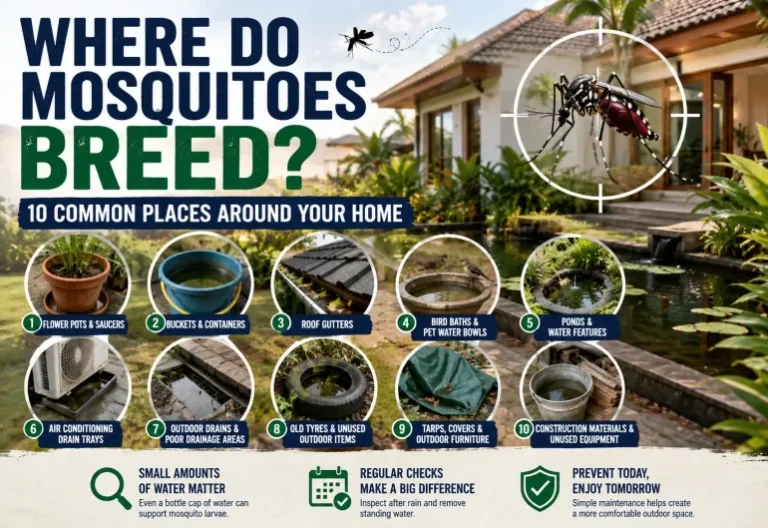
Mosquitoes do not need a large pond to reproduce.
Small containers, plant saucers, buckets, blocked drains, discarded items, and other places that hold water can provide suitable breeding sites. Some species associated with dengue can develop in water-filled containers around homes.
This is particularly relevant in Bali after rain.
A villa may look perfectly clean, but a few small areas of stagnant water around the garden can provide repeated opportunities for mosquitoes to breed.
That is why simply spraying the garden may not solve the problem.
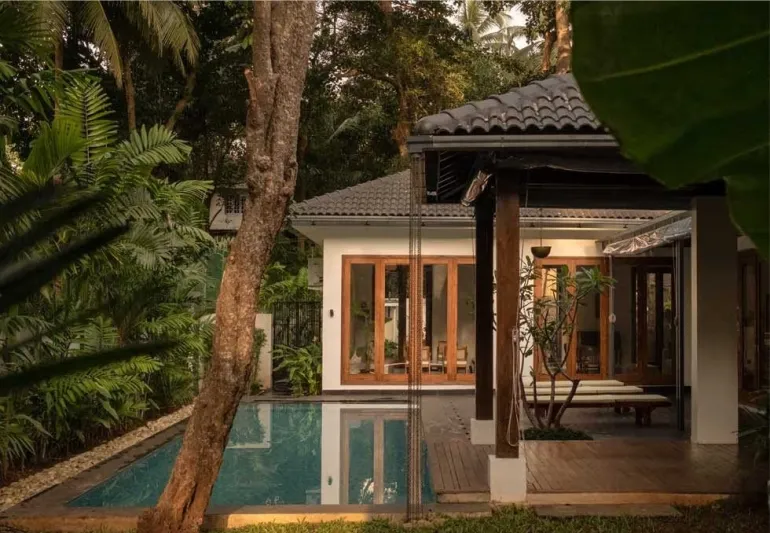
The traditional Bali villa is designed to blur the boundary between indoors and outdoors.
An open kitchen, outdoor bathroom, partially open bedroom, garden pavilion, or large terrace can be beautiful—but it also makes it easier for mosquitoes to enter.
This is something expats regularly notice when comparing Bali accommodation. In one discussion about open-air villas, residents specifically raised concerns about being bitten while cooking, showering, or spending time in outdoor areas.
Screens, doors, and enclosed sleeping areas can make a significant difference.
If a villa is essentially open to the garden, you should expect a different mosquito experience from a fully enclosed apartment.
Dense tropical landscaping is another factor.
Plants themselves are not necessarily the problem. The combination of shade, moisture and water-holding areas can create conditions that mosquitoes prefer.
Poorly maintained drainage, containers hidden behind plants, blocked gutters, and areas that remain damp after rainfall are more important than simply having lots of greenery.
This is why two villas with equally beautiful gardens can have very different mosquito activity.
Living beside rice fields is often assumed to be the main reason for mosquito problems in Bali.
The reality is more nuanced.
A discussion among Bali residents illustrates this well. Some people associate rice-field properties with higher mosquito activity, while others point out that flowing or regularly managed water is not necessarily the same as stagnant water. Small pools and containers around a property may be more relevant breeding sites. (Balipod)
So the question should not simply be:
“Is this villa next to a rice field?”
A better question is:
“Where can mosquitoes breed around this property?”
Bali’s rainy periods can create many temporary water-holding sites.
A garden that looked fine yesterday can have dozens of small puddles or containers filled with rainwater today.
Some mosquito eggs can remain attached to container surfaces until water covers them again. Once conditions are suitable, the mosquito life cycle can progress surprisingly quickly.
This means mosquito pressure can increase after periods of heavy rainfall even when nothing obvious has changed inside the villa.
Your villa does not exist in isolation.
Mosquitoes can move between gardens, drains, vacant lots and neighbouring properties. If a nearby property has poorly managed standing water, your own efforts may not completely eliminate mosquito activity.
This is one reason mosquito control sometimes requires looking beyond the immediate garden.
A perfectly maintained villa can still have mosquitoes if suitable breeding sites exist nearby.
This is also why there is no universal answer to:
“How often should a Bali villa be fogged?”
A property with enclosed rooms, good screens, effective drainage and few breeding sites may require very different management from an open-air villa surrounded by dense vegetation and standing water.
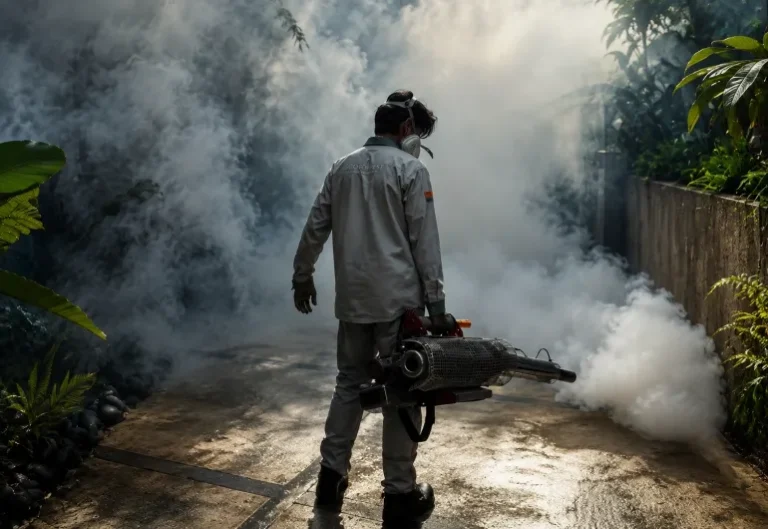
Fogging can reduce adult mosquitoes, but as we discussed in Does Mosquito Fogging Really Work in Bali?, it does not remove the conditions that allow mosquitoes to return.
The more effective approach is to identify why mosquitoes are present before deciding how much treatment is necessary.
Some Bali villas have more mosquitoes because they provide better access, better breeding conditions, or both.
The biggest factors are usually:
So if your villa has more mosquitoes than your neighbour’s, it does not necessarily mean Bali is simply “full of mosquitoes.”
It may mean that your property has created a more favourable environment for them.
Before reaching for another can of insecticide, look at the property itself.
The question is not only “How do I kill the mosquitoes?”
It is also:
“Why does this property keep attracting them?”
Need help controlling mosquitoes around your Bali property?
Learn more about our approach to mosquito control in Bali, including practical ways to reduce mosquito activity around homes and villas.