Address:
Jl. Kebo Iwa II Gg. Batu Sunia, Padangsambian Kaja, Kota Denpasar
Working Hours:
Monday–Friday: 8:00 AM – 5:00 PM
Saturday–Sunday: 8:00 AM – 3:00 PM


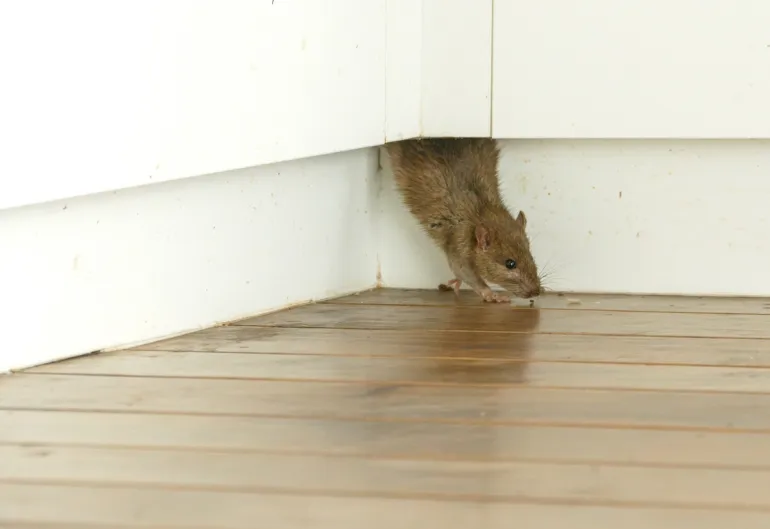
Seeing one rat doesn't always mean you have an infestation. Learn the signs of established rodent activity in a Bali home, from droppings and gnaw marks to nesting, scratching sounds, and repeated sightings.
 ByAriastra
Seeing a rat around your Bali home can be unsettling. But seeing one rat does not automatically mean you have a rodent infestation.
In a tropical environment like Bali, rodents can move through gardens, drains, neighboring properties, and other outdoor spaces. An occasional sighting outside your home may simply mean a rat is passing through.
The more important question is whether there is evidence of repeated activity inside or around your property.
Here are the signs worth looking for.
One sighting in the garden is very different from seeing rats several nights in a row.
Repeated sightings suggest that your property may be providing something the rodents need—usually food, water, shelter, or access to a protected route.
Pay particular attention if you see rats:
A single outdoor sighting isn’t necessarily alarming. Repeated activity is a reason to investigate.
Droppings are one of the clearest signs of rodent activity.
Look around places where food is stored, along walls, behind appliances, inside cupboards, and in dark storage areas.
Fresh droppings are usually darker and softer, while older droppings become harder and duller over time.
Finding several droppings in the same area suggests that the location is being used regularly rather than simply crossed by an occasional animal.
If you’re unsure whether droppings are from rats or another animal, avoid handling them directly. Rodent waste can carry pathogens, so cleaning should be done carefully.
Hearing scratching, movement, or gnawing sounds from the ceiling or walls can be another warning sign.
This is particularly relevant in Bali homes because roof spaces and ceiling voids can provide warm, protected areas for rodents.
Occasional noises aren’t necessarily proof of rats. Tropical homes also attract geckos, insects, and other animals.
But repeated scratching in the same area, especially when combined with droppings or gnaw marks, deserves further investigation.
Rats have continuously growing incisors, so they naturally gnaw on materials.
Look for damage to:
Cable damage is particularly concerning because it can create a fire or electrical hazard.
A few damaged food packages may indicate that rodents have discovered an accessible food source. Repeated gnawing in different areas suggests more established activity.
Rodents can build nests using whatever materials are available.
In a Bali home, this might include shredded cardboard, paper, fabric, insulation, leaves, or other soft materials.
Check quiet, undisturbed areas such as storage spaces, roof voids, behind appliances, or rarely used cupboards.
A nest is more significant than simply seeing a rat outdoors because it suggests that the property is being used as a shelter or breeding location.
A persistent musky or unpleasant smell in a particular area can sometimes indicate rodent activity.
The smell may come from urine, droppings, nesting material, or a dead animal.
Odor alone isn’t enough to diagnose an infestation. Bali’s humid climate can create many unusual smells, particularly in drains, bathrooms, storage rooms, and poorly ventilated areas.
But if a persistent smell occurs together with droppings, scratching, or other evidence, it’s worth investigating the area.
Rats are generally more active at night, so repeated daytime activity can be a useful warning sign.
However, seeing a rat during the day does not automatically mean you have a severe infestation.
A rat may be active during daylight because it has been disturbed, is searching for food, or has adapted to the environment.
Think of daytime activity as one piece of evidence, rather than a diagnosis by itself.
If you suspect rodent activity, don’t only inspect the kitchen.
In a typical Bali property, check:
Garden → drains → exterior walls → roof → ceiling void → kitchen → storage areas
Pay particular attention to openings around pipes, cables, doors, roof structures, and drainage systems.
A rat problem inside the house may actually originate outside the building.
For example, an uncovered garbage container, dense vegetation, a drainage channel, or a neighboring property may provide food and shelter. The rat then uses a small opening in your building simply as a convenient route indoors.
Usually, no.
A better way to think about it is to look for patterns rather than counting animals.
Don’t start with rat poison simply because you saw one animal.
First, try to understand why the property is attractive to rodents.
Remove accessible food and garbage, secure pet food, reduce clutter, check potential entry points, and inspect areas where activity has been observed.
If evidence continues to appear, professional inspection can help determine where the rodents are coming from and whether control measures are actually necessary.
For a deeper look at the modern approach to rodent management, see Modern Rat Control in Bali: A Smarter Approach for Homes and Villas.
A single rat crossing your garden doesn’t necessarily mean your Bali home has an infestation.
What matters is whether there is evidence that rodents have established themselves around or inside your property.
Repeated sightings, droppings, nesting, gnaw marks, and activity inside the building are much more meaningful than one unexpected encounter.
So before reaching for poison, take a closer look.
The goal isn’t simply to find the rat. It’s to understand why the rat is there.