Address:
Jl. Kebo Iwa II Gg. Batu Sunia, Padangsambian Kaja, Kota Denpasar
Working Hours:
Monday–Friday: 8:00 AM – 5:00 PM
Saturday–Sunday: 8:00 AM – 3:00 PM


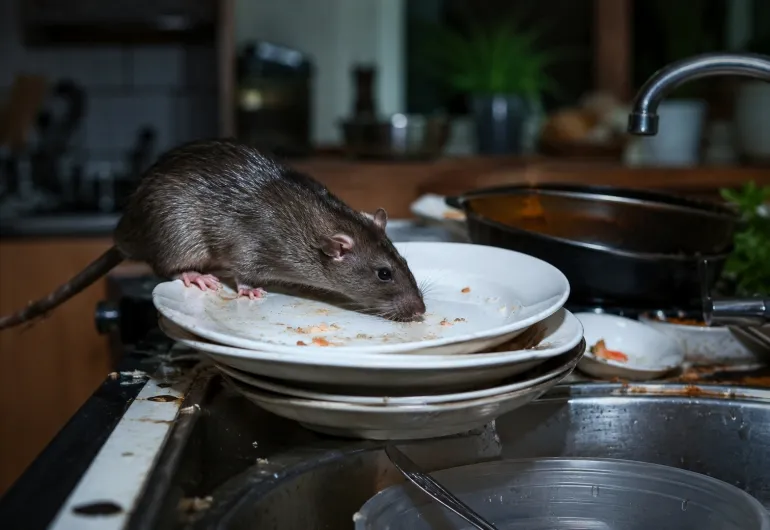
Many people think a rat exterminator simply removes rodents, but modern pest management takes a different approach. Learn why rats return, why complete elimination isn't realistic, and how long-term rodent control creates healthier homes and properties.
 ByAriastra
Understanding Why Modern Rodent Management Is About Balance—Not Elimination
One of the most common questions people ask after seeing a rat around their home or villa is simple:
“Do I need a rat exterminator?”
The short answer is sometimes—but not in the way many people imagine.
Modern pest management isn’t about eliminating every rat from the environment. In reality, that would be impossible. Rats are highly adaptable animals that exist in cities, farms, forests, and tropical islands around the world—including Bali.
The real objective is much more practical: reducing rodent activity to a level where it no longer threatens your property, health, or quality of life.
Understanding this difference helps explain why some rat problems keep returning, even after poison has been used, and why professional rodent control focuses on much more than simply removing rodents.
Although many newcomers associate rats with tropical destinations, rodents are found on every continent except Antarctica.
Whether you’re living in London, Sydney, New York, Singapore, or Bali, rats have learned to thrive wherever people provide food, water, and shelter.
What changes from one location to another isn’t the presence of rodents—it’s the environment that allows them to survive.
In Bali, warm temperatures, abundant vegetation, open drainage systems, rice fields, rivers, and year-round food sources simply create conditions where rodents can remain active throughout every season.
For homeowners and villa managers, this means the question isn’t “Can rats exist here?”
The better question is:
“What attracts them to my property?”
That shift in perspective is where effective rodent management begins.
This is perhaps the biggest misunderstanding in rodent control.
Many people believe that if rats return, the previous treatment must have failed.
In reality, rodents rarely return because they “survived” a treatment. They return because the conditions that attracted them never changed.
If food remains available, water is easily accessible, and entry points stay open, new rodents will eventually occupy the same space.
Think of it this way.
Removing one group of rats without addressing the environment is a little like emptying water from a leaking boat without repairing the hole.
The problem may appear solved for a while, but sooner or later it returns.
This is why experienced pest professionals spend as much time looking for:
as they do placing traps or bait.
The rodents you see are often only part of a much larger picture.
The word “exterminator” has been used for decades, and many people still use it today.
However, modern rodent management has gradually moved beyond the idea of simply exterminating pests.
Killing rodents may reduce a population temporarily, but if the environment continues to support new rodents, the problem is likely to return.
Professional rodent control therefore combines several strategies rather than relying on a single solution.
These typically include:
In other words, successful rodent control focuses on managing the cause, not just the symptoms.
One of the biggest misconceptions is that a successful pest control programme means zero rodents everywhere.
In reality, this isn’t how ecosystems work.
Rodents reproduce quickly, travel considerable distances, and continuously move between natural habitats and urban environments.
Even if every rodent disappeared from one property today, others could eventually arrive from neighbouring gardens, rice fields, drainage systems, vacant land, or surrounding buildings.
For this reason, professional rodent management aims for something more realistic:
keeping rodent activity below the level where it becomes a health risk, damages property, or disrupts everyday life.
This long-term approach is generally more sustainable than repeatedly responding only after rodents become visible.
Although rodents are unwanted inside homes and businesses, they remain an important part of natural ecosystems.
Many species help disperse seeds, recycle organic matter, and provide food for predators such as owls, snakes, monitor lizards, and other wildlife.
The goal of responsible pest management is therefore not to remove rodents from nature, but to prevent them from becoming a problem where people live and work.
This balanced approach supports both public health and environmental responsibility.
Living in Bali means sharing the environment with many forms of wildlife, from geckos and birds to insects and rodents.
Most of the time, these animals remain part of the surrounding ecosystem without causing problems.
Difficulties begin when they gain easy access to homes, villas, restaurants, or commercial buildings.
The most successful properties are rarely those that rely on constant extermination.
Instead, they focus on good maintenance, regular inspections, proper waste management, and practical prevention that makes the property less attractive to rodents in the first place.
If you’ve seen a rat around your property, it’s natural to think about finding a rat exterminator.
But the more useful question may be:
Why is the rat here in the first place?
Once that question is answered, the solution often becomes much clearer.
Modern rodent management isn’t simply about removing rodents—it’s about understanding the environment that allows them to thrive and reducing those conditions over time.
For homeowners, villa managers, and businesses in Bali, this approach creates a more comfortable property while respecting the balance between people and the tropical environment that makes the island unique.