Address:
Jl. Kebo Iwa II Gg. Batu Sunia, Padangsambian Kaja, Kota Denpasar
Working Hours:
Monday–Friday: 8:00 AM – 5:00 PM
Saturday–Sunday: 8:00 AM – 3:00 PM


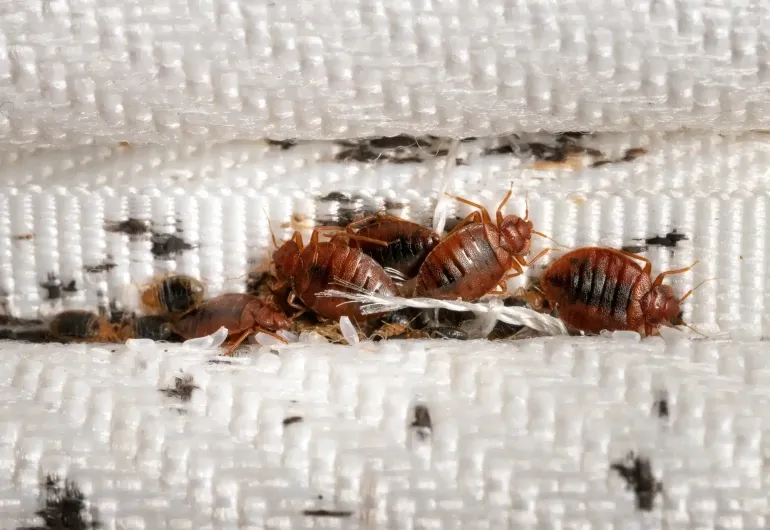
Learn how to identify the early signs of bed bugs before a small problem becomes a serious infestation. This guide explains what to look for, where bed bugs hide, how to inspect your home or hotel room, and when professional treatment may be necessary.
 ByAriastra
Finding a few itchy bites after sleeping can be unsettling. Your first thought might be mosquitoes, fleas, or even an allergic reaction. But in some cases, these unexplained bites may be one of the earliest signs of a bed bug infestation.
The challenge is that bed bugs are experts at staying out of sight. They hide in tiny cracks during the day and usually come out at night when people are asleep. By the time you notice them crawling around, the infestation may already be well established.
Fortunately, bed bugs leave behind several clues long before you actually see one. Tiny black spots on bedding, shed skins, blood stains, or clusters of bites can all point to their presence. Learning to recognize these warning signs early can make treatment faster, more effective, and less expensive.
Whether you’re a homeowner, tenant, hotel manager, villa owner, or frequent traveler, understanding how to identify bed bugs is the first step toward preventing a larger infestation.
In this guide, you’ll learn the most common signs of bed bugs, where they hide, how to inspect your home, and when it’s time to seek professional help.
Bed bugs are small, wingless insects that feed exclusively on the blood of humans and other warm-blooded animals. The species most commonly found in homes, hotels, apartments, and accommodation facilities is Cimex lectularius.
Adult bed bugs are roughly the size of an apple seed, measuring about 4–7 mm long. Their bodies are flat and oval before feeding, allowing them to squeeze into extremely narrow hiding places such as mattress seams, bed frames, furniture joints, electrical outlets, and cracks in walls.
After feeding, their bodies become swollen, elongated, and reddish-brown due to the blood meal.
Unlike mosquitoes or flies, bed bugs cannot fly or jump. Instead, they crawl surprisingly quickly and often spread by hitchhiking on luggage, clothing, backpacks, used furniture, or personal belongings.
One reason bed bugs are difficult to detect is their nocturnal behavior. They usually remain hidden during daylight hours and become active shortly before dawn, when people are in their deepest stages of sleep.
According to the Centers for Disease Control and Prevention, bed bugs are not known to transmit diseases to humans. However, their bites can cause itchy skin, allergic reactions in some individuals, sleep disruption, anxiety, and significant emotional stress.
For hotels, villas, and rental properties, even a small infestation can quickly lead to guest complaints and damage to reputation if not addressed promptly.
Many people assume that bed bugs will disappear if they simply change their sheets or clean the bedroom more often.
Unfortunately, that’s rarely the case.
Bed bugs reproduce surprisingly quickly. A single female can lay hundreds of eggs during her lifetime under favorable conditions. Since the eggs are tiny and well hidden, an infestation can continue growing unnoticed for weeks before obvious signs appear.
The earlier an infestation is identified, the easier it usually is to contain. Early treatment often means:
On the other hand, delaying action gives bed bugs more opportunities to reproduce and spread into furniture, luggage, adjacent bedrooms, and even neighboring units in multi-family buildings.
This is why pest management professionals recommend investigating unusual bite patterns or suspicious marks on bedding as soon as they appear rather than waiting until live insects become visible.
No single sign can confirm a bed bug infestation on its own. Instead, professionals look for several indicators together. The more evidence you find, the greater the likelihood that bed bugs are present.
The most obvious sign is finding an actual bed bug.
Adult bed bugs are:
Young bed bugs, known as nymphs, are much smaller and lighter in color. Newly hatched nymphs can appear almost transparent, making them difficult to spot without close inspection.
Bed bugs usually hide close to where people sleep, including:
Because they avoid light, it’s common to find them hiding rather than crawling openly across the room.
Small black dots on your mattress or sheets are one of the most reliable indicators of bed bug activity.
These spots are bed bug feces, consisting of digested blood that has dried after being excreted.
They often resemble marks made by a fine black marker and typically appear around:
Unlike ordinary dirt, these spots may smear into a rusty or dark brown stain if lightly wiped with a damp cloth.
Finding multiple fecal spots concentrated around sleeping areas is a strong indication that bed bugs have been active nearby.
Another common sign is tiny reddish stains on pillowcases or bed sheets.
These stains may occur when:
Blood spots alone don’t necessarily confirm bed bugs, as they can have other causes. However, when combined with fecal spots, bites, or shed skins, they become much more meaningful.
As bed bugs grow, they molt several times before reaching adulthood.
Each time they develop into a larger stage, they leave behind an empty outer shell called an exoskeleton.
These shed skins are:
Unlike live insects, shed skins don’t move, but they indicate that bed bugs have been developing and reproducing nearby over time.
Bed bug eggs are extremely small, measuring about 1 mm in length.
They are:
Female bed bugs lay eggs deep inside protected cracks where they’re less likely to be disturbed.
Common locations include:
Because of their size, eggs are often overlooked until an infestation becomes more advanced.
Larger infestations sometimes produce a distinctive odor.
People often describe it as:
This smell comes from chemicals released by bed bugs through specialized scent glands.
Not everyone notices this odor, and it usually develops only when populations become relatively large. Therefore, the absence of a smell doesn’t rule out an infestation.
For many people, itchy bites are the first sign that something isn’t right.
Bed bug bites commonly appear:
However, it’s important to understand that bites alone cannot confirm bed bugs.
Many skin conditions—and bites from mosquitoes, fleas, mites, or other insects—can look remarkably similar. In fact, some people develop obvious itchy welts, while others show little or no visible reaction at all.
For this reason, pest control professionals never diagnose a bed bug infestation based solely on bite marks. Instead, they combine bite patterns with physical evidence such as live insects, fecal spots, eggs, or shed skins before reaching a conclusion.
If you’re waking up with unexplained bites and also notice any of the signs described above, it’s worth performing a careful inspection as soon as possible.
Bed bugs prefer to stay close to their food source—people. That’s why they’re most often found within a few feet of beds, sofas, or other places where individuals spend long periods resting.
Although mattresses are their most well-known hiding place, bed bugs can live in many other locations, especially as an infestation grows.
Common hiding spots include:
In hotels, villas, and short-term rentals, bed bugs often spread from one room to another through luggage, housekeeping carts, shared laundry facilities, or adjoining walls.
The closer a hiding place is to where people sleep, the more likely it is to harbor bed bugs.
A careful inspection can often reveal early signs before an infestation becomes severe.
Remove all bedding and examine:
Look for:
Use a flashlight to examine:
Bed bugs prefer narrow spaces where they remain hidden during the day.
Inspect furniture within approximately two meters (six feet) of the bed, including:
Remove drawers whenever possible and inspect underneath and behind them.
If the infestation has been present for some time, bed bugs may spread to:
Larger infestations generally occupy a wider area than newly established ones.
Many people mistake bed bug bites for bites from mosquitoes, fleas, or ants. While bites can look similar, the surrounding evidence is often different.
| Feature | Bed Bugs | Mosquitoes | Fleas | Ants |
|---|---|---|---|---|
| Usually appear after sleeping | ✓ | Sometimes | Rarely | No |
| Often found in lines or clusters | ✓ | Usually isolated | Clusters | Random |
| Physical evidence in bedding | ✓ | No | Rarely | No |
| Blood stains on sheets | Sometimes | No | No | No |
| Black fecal spots near bed | ✓ | No | No | No |
| Live insects hiding in mattress | ✓ | No | No | No |
It’s worth remembering that reactions to bites vary widely. Some people develop large, itchy welts, while others may have little or no visible reaction.
For this reason, identifying the insect itself—or finding physical evidence—is far more reliable than judging by bite appearance alone.
If you suspect bed bugs, avoid rushing to throw away your mattress.
In many cases, mattresses can be treated successfully as part of a professional treatment program.
Instead, consider these practical steps:
Transporting mattresses, furniture, or bedding to another room can accidentally spread bed bugs throughout the property.
Wash bedding, clothing, and washable fabrics using the hottest temperature recommended by the manufacturer.
Dry them on high heat, as heat is one of the most effective ways to kill bed bugs and their eggs.
Store cleaned items in sealed plastic bags until treatment is complete.
Vacuum:
Dispose of the vacuum contents immediately in a sealed bag outside the building.
Remember that vacuuming alone will not eliminate an infestation but can help reduce the number of insects before professional treatment.
Over-the-counter insecticides often fail to eliminate bed bugs completely.
In some cases, improper spraying causes bed bugs to scatter into new hiding places, making treatment more difficult.
Professional pest management programs usually combine careful inspection, targeted treatment, monitoring, and follow-up visits rather than relying on a single chemical application.
Read our guide: How to Get Rid of Bed Bugs Naturally: What Works and What Doesn’t
Early intervention usually produces the best results.
Professional assistance is recommended if:
Professional inspections can identify hidden harborages that are easy to miss during a visual inspection.
Integrated treatment methods may include detailed inspections, targeted applications, monitoring devices, steam treatment, or other control strategies depending on the level of infestation.
If you’re located in Bali and suspect bed bugs, arranging a professional inspection early can help prevent the infestation from spreading further and reduce the overall cost and complexity of treatment.
Although no prevention method is foolproof, these habits can significantly reduce the likelihood of bringing bed bugs into your home or accommodation.
For hotels and villas, routine inspections are often more cost-effective than waiting until guests report a serious infestation.
Bed bugs are difficult to spot, but they rarely remain completely invisible. Small black fecal spots, blood stains, shed skins, eggs, unusual bite patterns, and live insects all provide valuable clues that shouldn’t be ignored.
The key is to look at the overall picture rather than relying on a single symptom. Early detection allows infestations to be managed before they spread to additional rooms or neighboring units.
If you suspect bed bugs in your home, hotel, or villa, a thorough inspection is the best place to start. When multiple signs are present, professional treatment is often the fastest and most reliable way to eliminate the infestation and prevent it from returning.