Address:
Jl. Kebo Iwa II Gg. Batu Sunia, Padangsambian Kaja, Kota Denpasar
Working Hours:
Monday–Friday: 8:00 AM – 5:00 PM
Saturday–Sunday: 8:00 AM – 3:00 PM



Waking up with itchy bites in Bali? While mosquitoes are often the culprit, they're not the only possibility. Learn how to tell the difference between mosquito bites, bed bugs, fleas, and other common insects—and discover when it's time to take a closer look.
You’ve finally settled into life in Bali.
Maybe you’re staying in a private villa in Canggu, renting an apartment in Sanur, or enjoying a quiet guesthouse in Ubud. The weather is warm, the scenery is beautiful, and life moves at a slower pace.
Then one morning, you wake up with a few itchy red bites on your arm.
You shrug it off.
“Mosquitoes,” you think.
After all, mosquitoes are part of everyday life in Bali.
But the next morning, there are more bites.
A few days later, you’re still waking up with fresh marks—often on your arms, shoulders, legs, or neck. You start checking the room for mosquitoes, keeping the windows closed, and applying insect repellent before bed. Yet the bites keep appearing.
Sound familiar?
If so, mosquitoes may not be the only explanation.
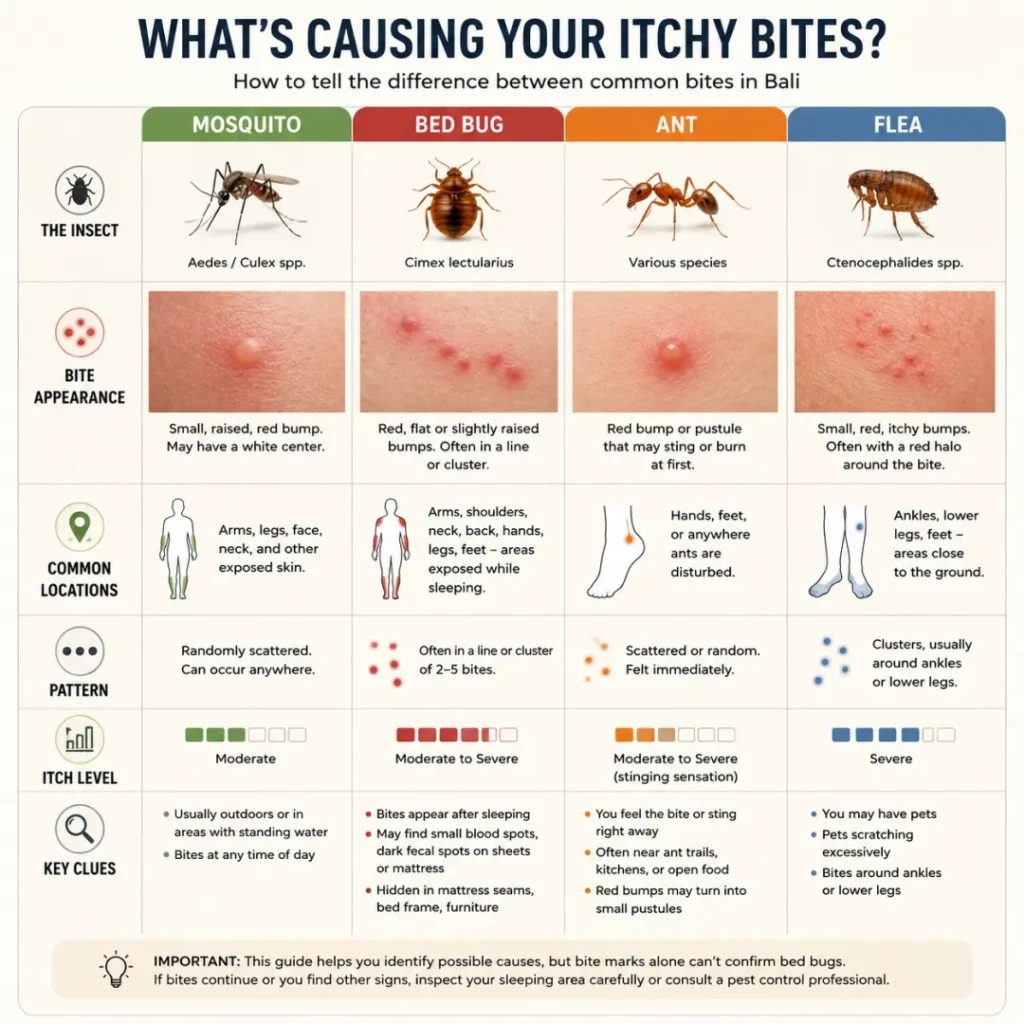
While mosquito bites are undoubtedly the most common cause of itchy skin in Bali, they’re not the only insects that feed on humans. Bed bugs, fleas, sand flies, ants, and even mites can all leave behind itchy bites that are surprisingly easy to mistake for one another.
This is especially true for newcomers to Bali. Many expats, digital nomads, and long-term travelers aren’t familiar with bed bugs because they’ve never encountered them before. As a result, an early infestation is often mistaken for mosquito bites until the problem becomes much more obvious.
The good news is that itchy bites don’t automatically mean you have bed bugs.
The challenge is knowing how to tell the difference.
In this guide, we’ll explore the most common causes of itchy bites in Bali, explain how to recognize the signs of a possible bed bug infestation, and help you decide when simple prevention is enough—and when it’s time to investigate further.
If you’ve recently moved to Bali or are spending an extended holiday here, blaming mosquitoes is completely understandable.
Bali’s tropical climate provides ideal conditions for mosquitoes throughout the year. Warm temperatures, seasonal rainfall, lush gardens, and abundant standing water create an environment where mosquito populations can thrive. Even well-maintained homes and luxury villas can occasionally have mosquitoes, particularly during the rainy season or in properties with open-air living spaces.
Because mosquitoes are so common, most people rarely question the source of an itchy bite. It’s simply part of living in the tropics.
However, relying on that assumption can sometimes delay the discovery of other pests that require a very different solution.
For example, mosquitoes usually bite exposed skin while you’re awake or asleep, and they can continue biting in different locations throughout the day. Bed bugs behave differently. They typically feed at night, hide during daylight hours, and often remain close to the bed where people sleep.
Understanding these differences is the first step toward identifying what’s really causing those mysterious bites.
Not every itchy bite is caused by the same insect.
Bali’s tropical environment is home to a variety of biting insects, each with different habits, preferred habitats, and bite patterns. Understanding these differences can save you unnecessary worry—and help you take the right action if the problem persists.
Mosquitoes are by far the most common cause of itchy bites in Bali.
They’re active throughout the island, especially around gardens, rice fields, rivers, and areas with standing water. Some species are most active during the day, while others prefer to feed around dusk or throughout the night.
Mosquito bites usually appear as small, raised, itchy bumps. They can occur almost anywhere on the body that’s exposed, and it’s common to receive only one or two bites at a time. Because mosquitoes fly freely, the bites are often scattered rather than grouped together.
If you’re spending evenings outdoors, leaving windows open, or sleeping without adequate mosquito protection, mosquitoes remain the most likely explanation.
Fleas are another possibility, particularly if you’re staying in a property where cats or dogs are present.
Although fleas prefer animals as their primary hosts, they’ll also bite humans when given the opportunity. Their bites are typically very itchy and often appear around the ankles, lower legs, or feet because fleas usually jump from the floor or carpets.
If you notice pets scratching excessively or frequently see stray animals around your accommodation, flea bites become a more likely possibility.
If you’ve recently spent time on Bali’s beaches, especially around sunrise or sunset, sand flies could be responsible.
These tiny insects are much smaller than mosquitoes and are often difficult to notice while they’re biting. Their bites may appear in clusters and can remain itchy for several days.
Sand flies are more common in coastal environments than in urban neighborhoods, so recent beach visits can provide an important clue.
Certain ant species can also bite or sting when disturbed.
Unlike mosquitoes or bed bugs, ant bites usually happen while you’re awake. You may feel the bite immediately, and it often produces a sharp stinging sensation before developing into a small red bump.
Spiders, mites, and other insects may occasionally cause skin irritation as well, although these are generally much less common than mosquitoes or fleas.
Bed bugs deserve special attention—not because they’re the most common cause of itchy bites in Bali, but because they’re often the most overlooked.
Unlike mosquitoes, bed bugs don’t fly from room to room looking for people. Instead, they hide close to where humans sleep. During the day, they remain concealed in mattress seams, bed frames, headboards, upholstered furniture, and other narrow cracks. At night, they emerge to feed before returning to their hiding places.
Because of this behavior, many people continue blaming mosquitoes for days or even weeks before realizing something else is happening.
One of the first clues is timing.
If you’re consistently waking up with fresh bites after sleeping in the same bed—but rarely notice new bites during the day—it may be worth taking a closer look.
Another clue is location.
Bed bug bites often appear on areas of skin that remain exposed while sleeping, such as:
Some people develop several bites close together, while others may have only one or two. Interestingly, not everyone reacts to bed bug bites in the same way. Two people sleeping in the same bed can have completely different reactions—one may develop obvious itchy welts, while the other shows little or no visible sign at all.
For that reason, bite marks alone are never enough to confirm a bed bug infestation.
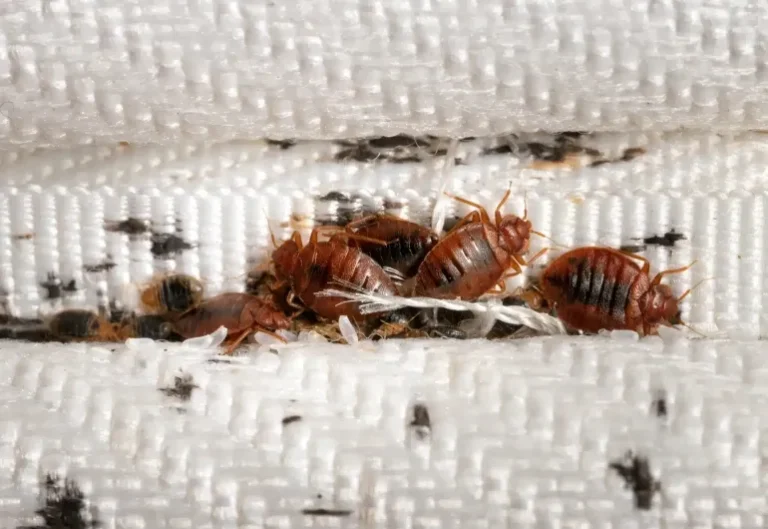
The most reliable approach is to combine the bite pattern with other signs, such as tiny black fecal spots on the mattress, small blood stains on the sheets, shed skins, or even live bed bugs hiding near the bed.
If you’ve never dealt with bed bugs before, you might wonder why they seem to appear in places that welcome travelers from around the world.
The answer isn’t that Bali has more bed bugs than other destinations.
It’s that popular tourist destinations experience constant movement of people—and bed bugs are remarkably good at traveling with them.
Unlike mosquitoes, bed bugs don’t fly or jump. Instead, they’re known as “hitchhikers.” They hide inside luggage, backpacks, clothing, or personal belongings and unknowingly travel with people from one location to another.
Imagine this scenario.
A traveler unknowingly stays in a room with a small bed bug infestation. One or two bugs crawl into the seams of a suitcase before checkout. A few days later, that same suitcase is placed on the bed in a completely different hotel, villa, or apartment.
Without anyone realizing it, the bed bugs have arrived at a new location.
This is one of the primary reasons bed bugs are found in cities and tourist destinations across the world—from New York and London to Paris, Singapore, Sydney, and Bali.
Modern travel has made the world more connected than ever before.
Millions of people move between countries every day, carrying luggage that passes through airports, hotels, taxis, cruise ships, trains, and holiday rentals.
For bed bugs, every journey creates another opportunity to spread.
This is why even the cleanest accommodation can occasionally experience a bed bug incident.
It’s important to remember that bed bugs are not attracted to dirt or poor hygiene. They are attracted to people.
As long as humans are sleeping in a room, bed bugs have everything they need to survive.
Many visitors come to Bali for a holiday lasting only a few days.
Expats and digital nomads, however, often stay for weeks or months in the same accommodation.
That longer stay can make a developing bed bug problem more noticeable.
At first, you may wake up with only one or two unexplained bites.
A week later, there may be several more.
Because the changes happen gradually, it’s easy to dismiss them as mosquito bites, a mild skin allergy, or irritation caused by Bali’s tropical climate.
By the time someone starts looking more closely, the infestation may already have become established.
Fortunately, bed bugs don’t appear overnight.
They reproduce gradually, which means early detection gives you the best chance of resolving the problem before it spreads to other rooms or neighboring units.
It’s an uncomfortable thought—but yes, it’s possible.
This doesn’t mean you’ve done anything wrong.
Bed bugs are excellent at staying hidden and can remain unnoticed during travel.
Some common ways they enter homes and accommodations include:
For this reason, pest management professionals often recommend simple preventive habits, such as keeping luggage off the bed, inspecting second-hand furniture before bringing it indoors, and checking mattresses when moving into a new property.
These small precautions can significantly reduce the risk of introducing bed bugs into your living space.
Reading about bed bugs online can make almost anyone feel anxious.
Suddenly, every itch seems suspicious.
The reality is much less alarming.
In Bali, mosquitoes remain the most common cause of itchy bites, particularly if you’ve been outdoors during the evening or live near gardens, rice fields, or standing water.
Bed bugs should only become a stronger possibility when several signs begin to point in the same direction—for example:
Looking at the bigger picture is far more reliable than focusing on bite marks alone.
If you’re still unsure, a careful inspection is the next logical step.
If you think bed bugs might be the cause of your itchy bites, the first step is simple:
Don’t panic.
Finding a few unexplained bites doesn’t automatically mean your home or villa has a bed bug infestation. In many cases, mosquitoes, fleas, or other insects are still the more likely explanation.
Instead of jumping to conclusions, take a systematic approach.
Start by inspecting your mattress seams, bed frame, headboard, and nearby furniture for common signs such as small black spots, tiny blood stains, shed skins, or live bed bugs. If you’re unsure what you’re looking for, our guide on Signs of Bed Bugs: How to Identify an Infestation Early can help you perform a basic inspection before taking further action.
If you still can’t find any evidence, continue monitoring the situation for several nights. Sometimes, bite patterns become clearer over time, making it easier to identify the real source.
It’s understandable to look for quick solutions online.
Many websites recommend spraying essential oils, using rubbing alcohol, or applying household insecticides around the bed.
While some of these methods may kill individual bed bugs on direct contact, they rarely eliminate an entire infestation. In some cases, improper treatment can even cause bed bugs to spread into new hiding places, making professional treatment more difficult later.
If you’re considering treating the problem yourself, it’s worth understanding which methods are supported by evidence and which are common myths.
You can learn more in our article, How to Get Rid of Bed Bugs Naturally: What Works and What Doesn’t, where we explain which natural approaches may help and where their limitations begin.
If you’ve confirmed signs of bed bugs—or if new bites continue appearing night after night despite your own inspections—it’s usually time to seek professional advice.
Early intervention is often much easier than dealing with a well-established infestation.
This is especially important in Bali, where villas, guesthouses, and holiday rentals experience frequent guest turnover throughout the year. A problem that begins in one bedroom can become much more difficult to manage if left untreated.
Professional inspections can identify hidden infestations, confirm whether bed bugs are actually present, and recommend the most appropriate treatment based on the severity of the problem.
Waking up with itchy bites in Bali doesn’t always mean bed bugs.
In fact, mosquitoes remain the most common cause, especially in tropical environments.
However, if the bites continue to appear in the same room, occur mainly after sleeping, or are accompanied by other warning signs around your bed, it’s worth taking a closer look rather than simply assuming they’re mosquito bites.
The good news is that bed bugs are much easier to manage when they’re discovered early.
A careful inspection, accurate identification, and the right treatment can often resolve the problem before it affects your comfort, your property, or your peace of mind.
Whether you’re visiting Bali for a holiday, working remotely as a digital nomad, or calling the island home, knowing the difference between mosquito bites and the early signs of bed bugs can help you act with confidence—and avoid unnecessary stress.