Address:
Jl. Kebo Iwa II Gg. Batu Sunia, Padangsambian Kaja, Kota Denpasar
Working Hours:
Monday–Friday: 8:00 AM – 5:00 PM
Saturday–Sunday: 8:00 AM – 3:00 PM


Discover why ants keep returning to homes and villas in Bali. Learn practical ways to prevent kitchen ants, bathroom trails, garden infestations, and ants in electrical equipment.
 ByAriastra
Living in Bali has many advantages, from tropical gardens to open-air kitchens and outdoor living spaces. However, these features can also make ant problems frustrating. Tiny ants may appear on kitchen counters within minutes, trails can return after cleaning, and some ants even find their way into bathrooms, gardens, and electrical equipment.
If you live in a villa, house, or rental property in Bali, you may have wondered why ants keep coming back even when your home is clean.
The answer is that effective ant control involves more than killing the ants you can see. You need to understand what attracts them, where they enter, and whether a colony is established nearby.
Ants need food, water, shelter, and a route to reach these resources. In tropical properties, they may find all four around kitchens, bathrooms, gardens, and building structures.
Common conditions that encourage ant activity include:
An open-living villa does not necessarily have a hygiene problem simply because ants appear. The layout may provide easy access from outdoor areas, while even a well-maintained bathroom can offer moisture and concealed entry routes.
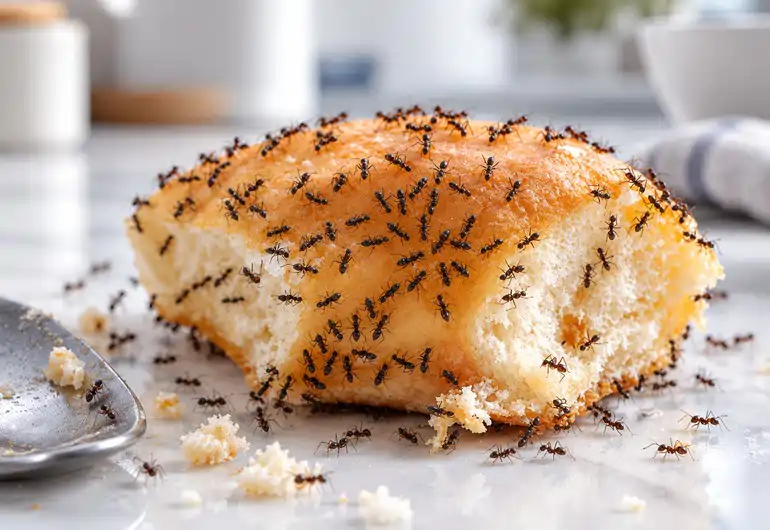
One of the most common complaints in Bali is finding tiny ants around food shortly after it has been left on the counter. These ants may follow an established trail between a food source and a nesting area.
Start with these steps:
Avoid leaving food in open packaging, especially overnight. If the ants continue to appear along the same route, cleaning alone may not solve the underlying problem. The colony or entry point may need to be identified.
Spraying visible ants may provide temporary relief, but it does not necessarily address the source of the infestation. Other ants may continue to emerge from the same nest or enter through the same gap.
Repeated spraying can also make it harder to determine where the ants are coming from.
A more effective approach is to trace their movement, identify likely nesting areas, and select a suitable treatment based on the ant activity and property conditions. Different ant species and nesting locations may require different control methods.
For occasional ants that disappear after cleaning, professional treatment may not be necessary. However, repeated trails, activity in several rooms, or ants emerging from walls and other concealed spaces are good reasons to consider a professional inspection.
Ants in a bathroom do not automatically mean the room is dirty. Bathrooms provide moisture and may contain small gaps around pipes, tiles, windows, and wall fittings.
To reduce activity:
If ants repeatedly emerge from a wall, ceiling, or plumbing area, avoid sealing the opening before understanding where the ants are coming from. A professional assessment can help identify the source and determine an appropriate response.
Ants sometimes enter electrical equipment because protected spaces can provide shelter, warmth, or access to nearby food and moisture. Repeated activity around an air conditioner, laptop, or electrical socket should not be ignored.
Never spray liquid pesticide directly into electrical sockets, laptops, air-conditioning units, or other electrical equipment. This can create electrical and equipment-damage risks.
Instead, remove nearby food sources, observe where the ants are entering, and address the ant trail or colony outside the equipment. If ants are inside an appliance or electrical fitting, have the equipment checked by an appropriate technician while the pest problem is addressed separately.
Ants in lawns, garden paths, and outdoor seating areas can make it uncomfortable for children and pets to play outside. Some species may bite or sting when their nests are disturbed.
The first step is to identify the ants and locate active nesting areas. Avoid disturbing a nest with bare hands or applying pesticide indiscriminately across the garden.
Targeted treatment can focus on the affected areas and the source of activity. If children or pets use the garden, tell the pest control provider before treatment so the method and required precautions can be planned accordingly.
Keep people and animals away from treated areas for the period specified by the product label and applicator instructions.
Some household products and essential oils may temporarily disrupt ant trails or discourage activity in certain areas. However, they should not be considered a reliable solution for every established infestation.
Ant chalk and other readily available products should not automatically be assumed harmless. Always check product instructions and keep treatments away from children, pets, food, and food-preparation surfaces as directed.
For a lower-impact approach, begin with sanitation, sealed food storage, moisture management, and practical exclusion. If these measures do not resolve recurring activity, targeted professional treatment may be more appropriate than repeatedly spraying broad areas.
No pesticide treatment should be described as completely risk-free. The level of risk depends on the product, dose, application method, exposure, and whether the required precautions are followed.
Tell your pest control provider if you have children, cats, dogs, fish ponds, or other sensitive areas around your property. Ask which areas will be treated, what product is being used, and how long people and pets should remain away.
An Integrated Pest Management (IPM) approach combines prevention, inspection, sanitation, monitoring, exclusion, and targeted treatment where necessary. The aim is to control the infestation while avoiding unnecessary pesticide use.
You may be able to manage occasional ant activity with better food storage, cleaning, and moisture control. Professional help becomes more useful when:
At EcoforPest, our ant control approach starts by inspecting ant trails, likely nesting areas, food and moisture sources, and entry points. Treatment is then selected according to the activity and conditions at the property, with prevention measures intended to reduce the chance of recurring problems.
Professional Ant Control
Get practical guidance for managing recurring ant problems in your home or villa. Explore our ant control service or contact EcoforPest to discuss your property’s needs.
Complete and permanent elimination can be difficult where outdoor access, vegetation, food, and moisture remain available. Identifying the source, reducing attractants, and addressing entry routes can help provide longer-lasting control.
Not necessarily. Repeated spraying may kill visible ants without resolving the underlying source. Start by removing food residue and observing the trail. If activity keeps returning, consider identifying the colony and using a targeted control method.
Flying ants and termite swarmers can look similar, particularly after rain. Because the two require different control approaches, correct identification is important. If you are unsure what you are seeing, arrange an assessment rather than assuming all flying insects are ants.
Not always. Occasional activity may stop without professional treatment. An inspection is more useful when ants return repeatedly, appear in several areas, or seem to emerge from concealed spaces.
Secure food, clean spills, manage moisture, and observe where the ants travel. If these measures do not resolve the problem, a professional inspection can help identify the source and determine an appropriate treatment plan.